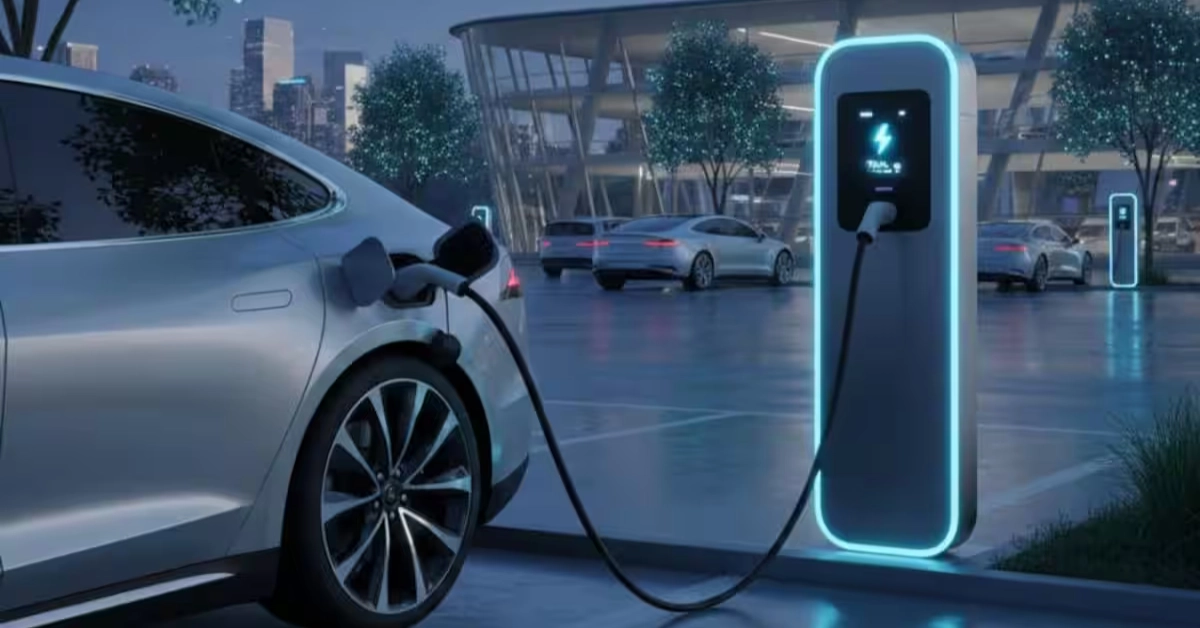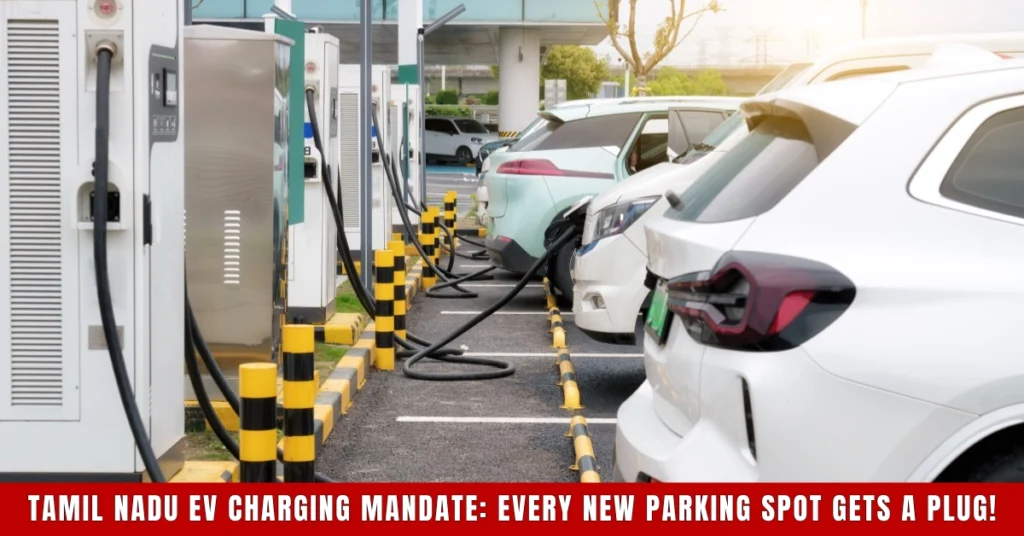
Tamil Nadu EV Charging Mandate Overview
- Mandatory EV Infrastructure: New residential, commercial, and large buildings must include EV charging points for every parking slot.
- Residential Rules: 1 charger per car/two-wheeler space; for >50 dwelling units, fast-charging for visitor parking too.
- Commercial Mandate: Buildings >300 sq m FSI reserve 10% parking for EVs with fast-charging points.
- Exemptions: Residential <14m height, ≤8 units, or <750 sq m built-up area.
- Policy Alignment: Follows 2023 Tamil Nadu EV Policy recommendations for building code updates.
- EV Market Boost: Aims to make Tamil Nadu India’s sustainable mobility leader.
- Broader Impact: Supports 30% EV penetration by 2030, reduces range anxiety.
Tamil Nadu Mandates EV Charging Stations in Major Buildings: Every Parking Slot Wired for EVs!
Tamil Nadu is charging ahead in sustainable mobility, making EV charging points mandatory in all new residential, commercial, and large buildings under the amended Tamil Nadu Combined Development and Building Rules, 2019. The Housing and Urban Development Department’s move ensures one charger per parking space, with fast-charging for visitors in complexes over 50 units and 10% EV reservation in commercial structures >300 sq m FSI. Exempting smaller homes (<14m height, ≤8 units, <750 sq m), this reform aligns with the 2023 Tamil Nadu EV Policy, positioning the state as India’s green transport pioneer.
The regulation tackles range anxiety, boosts EV adoption, and fosters infrastructure for buses, cars, and trucks. Officials hail it as a key step toward 30% EV penetration by 2030, integrating charging into everyday life.
Residential Requirements: Charger for Every Spot
- Per Space: One EV charger per car/two-wheeler parking.
- Large Complexes (>50 Units): Fast-charging for visitor parking.
- Exemptions: Low-rise homes with minimal units/area.
Commercial/Industrial Mandate: 10% EV-Ready
- FSI >300 sq m: 10% parking reserved for EVs with fast charging.
- Coverage: Hotels, malls, cinemas, apartments, offices, and factories.
EV Policy 2023: The Blueprint
- Recommendations: Update building codes for EV integration.
- Encouragement: Commercial operators to install chargers.
- Vision: Tamil Nadu as a sustainable mobility leader.
Impact: Charging the Future
| Benefit | Outcome |
|---|---|
| Range Anxiety End | Seamless charging in homes/offices. |
| EV Adoption Surge | Easier ownership; supports 30% by 2030. |
| Green Shift | Cleaner air, reduced fossil fuel dependence. |
Conclusion: Tamil Nadu Wires Up for EVs
Tamil Nadu’s EV charging mandate isn’t regulation—it’s revolution. With chargers per spot, 10% commercial reservation, and policy backing, the state is plugging into a greener grid. From Chennai apartments to Coimbatore malls, infrastructure meets innovation, making EVs everyday. As India accelerates, Tamil Nadu leads the charge—sustainable, seamless, and unstoppable.
Source: dtnext.in
Read more about EV Car News
Also Read
- MG Windsor Big Discounts Jan 2026: First-Ever Offers Make It Cheaper Than Launch Price
- JSW Motors To Enter Passenger Car Space In June With Rs 45 Lakh Plug-In Hybrid SUV

- Maruti Suzuki Second Car Plant Gujarat Investment: ₹4,960 Crore for 10 Lakh Unit Capacity

- India’s EV Sales Reach 2.3 Million Units in 2025, 8 Percent of New Vehicles: Strong Growth Led by Two-Wheelers
- VinFast Off to a Fast Start, Crosses 1k EV Sales in India: Milestone in Just Four Months

- What Happens To EV Battery After End-Of-Life?