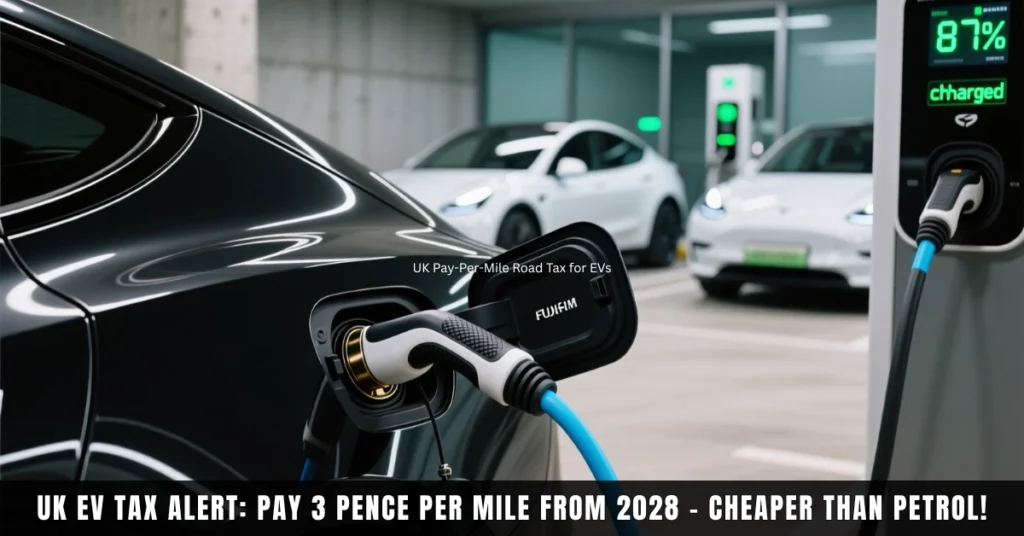
UK Pay-Per-Mile Road Tax for EVs: Quick Facts
- EV drivers pay 3 pence per mile; plug-in hybrid drivers pay 1.5 pence per mile.
- Starts in 2028 to replace the old tax system.
- Rates go up each year with inflation.
- Example: 8,500 miles a year costs about £255 for an EV (half of petrol car fuel duty).
- Revenue goal: £1.1 billion in 2028-29, rising to £1.9 billion by 2030-31.
- Impacts: May cut EV sales by 440,000 vehicles in five years.
- Support steps: Raise the expensive-car tax limit to £50,000 for EVs; £1.3 billion in grants till 2030; £200 million for more chargers.
- Petrol and diesel fuel duty frozen till September 2026.
UK Starts Pay-Per-Mile Tax for Electric Cars: What It Means for Drivers and the Road Ahead
The UK government has a new plan for road taxes. Electric vehicle (EV) drivers will soon pay for every mile they drive. This starts in 2028. The goal is to make sure EV users help pay for roads, just like petrol and diesel drivers do now.
Under the new rules, EV drivers will pay 3 pence for each mile. Plug-in hybrid drivers will pay 1.5 pence per mile. These rates will increase every year with inflation. The old tax system will end. It will be replaced by this pay-per-mile way.
For example, if you drive 8,500 miles in a year, an EV owner will pay about £255. That is half of what petrol and diesel drivers pay in fuel duty today.
The government says this will bring in £1.1 billion in the first year. By 2030-31, it could reach £1.9 billion. But there is a worry. The higher cost might stop some people from buying EVs. Experts think sales could drop by 440,000 vehicles over the next five years.
To help, the government is making other changes. The tax on expensive EVs will now apply only to cars over £50,000, up from £40,000. They will also give £1.3 billion in grants until 2030. Plus, £200 million will go to build more charging stations. For petrol and diesel cars, fuel duty will stay the same until September 2026.
This plan is part of the UK’s push for cleaner air and more EVs on roads. It shows that as more people switch to electric cars, the tax rules must change too. Drivers will need to track their miles. Apps or car systems might help with this.
In simple words, the new tax makes EVs pay their fair share for roads. But it could slow down the green car boom a bit.
Source: news18.com
Read more about EV Car News
Also Read
- MG Windsor Big Discounts Jan 2026: First-Ever Offers Make It Cheaper Than Launch Price
- JSW Motors To Enter Passenger Car Space In June With Rs 45 Lakh Plug-In Hybrid SUV
- Maruti Suzuki Second Car Plant Gujarat Investment: ₹4,960 Crore for 10 Lakh Unit Capacity

- India’s EV Sales Reach 2.3 Million Units in 2025, 8 Percent of New Vehicles: Strong Growth Led by Two-Wheelers
- VinFast Off to a Fast Start, Crosses 1k EV Sales in India: Milestone in Just Four Months

- What Happens To EV Battery After End-Of-Life?