Image source: cmv360.com
Tamil Nadu Extends EV Motor Vehicle Tax Exemption: Overview
- Tamil Nadu government extends 100% road tax exemption for electric vehicles (both transport and non-transport categories) until December 31, 2027.
- Exemption was set to end on January 1, 2026; new two-year extension announced via government order on December 29, 2025.
- Follows industry requests and reflects state’s commitment to EV adoption (Tamil Nadu’s EV market share ~7.8% in 2025).
- Departments tasked with studying future tax implications, reviewing other states’ policies.
- Aligns with Tamil Nadu Electric Vehicle Policy 2023; supports clean mobility and industry growth.
Tamil Nadu Boosts EV Push: Full Road Tax Exemption Extended to End-2027
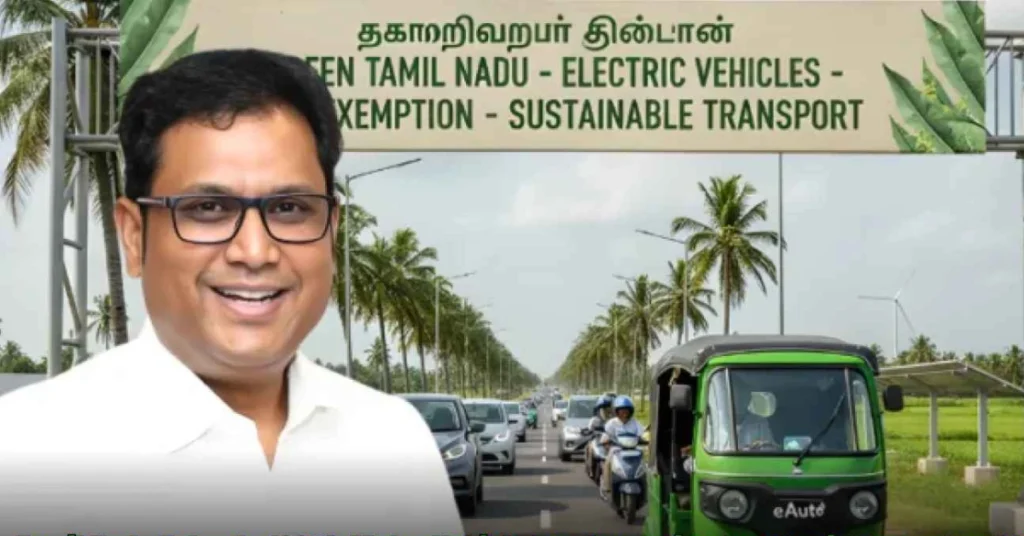
Tamil Nadu has reaffirmed its strong support for electric mobility with a timely two-year extension of the 100% motor vehicle tax exemption for all electric vehicles. Announced through a government order on December 29, 2025, the waiver — originally due to expire on January 1, 2026 — will now continue until December 31, 2027. This applies uniformly to both transport (commercial) and non-transport (personal) categories of battery-operated vehicles, ensuring broad benefits for buyers across segments.
The decision comes after sustained advocacy from EV manufacturers, industry associations, and stakeholders who emphasised the need for policy continuity to maintain adoption momentum. Tamil Nadu’s EV market share reached approximately 7.8% in 2025, reflecting steady progress driven by earlier incentives. The Transport Commissioner recommended the extension, highlighting its role in aligning with the Tamil Nadu Electric Vehicle Policy 2023 and national clean energy goals.
By prolonging the full exemption, the state provides crucial certainty for consumers planning purchases and manufacturers investing in production and supply chains. Road tax often adds a significant upfront cost — sometimes 10-15% of the vehicle’s price — so its removal makes EVs far more competitive against petrol and diesel alternatives, especially in price-sensitive two-wheeler and entry-car segments.
Key Details of the Extension
| Aspect | Details |
|---|---|
| Exemption Coverage | 100% road tax waiver for all EVs (transport & non-transport) |
| Validity | Until December 31, 2027 |
| Previous Deadline | January 1, 2026 |
| Originated From | Tamil Nadu EV Policy 2019; extended multiple times |
| Market Context | Tamil Nadu EV share ~7.8% in 2025 |
The policy ensures no differentiation by vehicle type, benefiting everything from electric scooters to cars and commercial vehicles.
Industry Response and Rationale
Stakeholders welcomed the move as essential for sustaining growth. Manufacturers argued that abrupt incentive withdrawal could stall progress, particularly with infrastructure and awareness still developing. The extension offers breathing room for:
- Buyers to plan purchases without urgency.
- Companies to ramp up local production and dealer networks.
- Ecosystem players (charging providers, service centres) to expand confidently.
Officials noted the waiver supports broader objectives: reducing urban pollution, lowering fuel import dependence, and fostering job creation in green tech.
Future Review: Balancing Incentives and Revenue
While extending the exemption, the government has directed departments to conduct a comprehensive study on potential future road tax structures for EVs. This review will examine:
- Policies in other states.
- Fiscal implications.
- Environmental and market impacts.
The balanced approach shows foresight: maintaining incentives now while preparing for a sustainable post-subsidy framework.
Tamil Nadu’s EV Leadership Role
Since introducing the waiver in 2019 (initially till 2022, then extended to 2025), Tamil Nadu has been among India’s most EV-friendly states. The latest renewal places it ahead of many peers with long-term full exemptions.
With hubs around Chennai and Coimbatore attracting investments from Ola Electric, Ather, and others, the policy reinforces the state’s position as a manufacturing and adoption leader.
What This Means for Buyers and the Market
For consumers:
- Immediate upfront savings on registration.
- Stronger value proposition for EVs vs ICE vehicles.
- More time to benefit before potential changes post-2027.
For the industry:
- Predictable demand supports capacity expansion.
- Encourages new model launches tailored for Tamil Nadu.
As India targets 30% EV penetration by 2030, state-level incentives like this remain vital bridges.
The Bigger Picture: Sustaining the EV Momentum
Tamil Nadu’s extension is a pragmatic vote of confidence in electric mobility. By providing two more years of full waiver, the state ensures continuity while studying long-term options — a model of balanced policymaking.
For residents, it means cleaner, cheaper transport options stay attractive longer. For the nation, it contributes to collective goals of reduced emissions and energy security.
Tamil Nadu continues to drive India’s green revolution — one tax-free EV at a time.
Source: varindia.com
Read more about Ev Car News
Also Read
- MG Windsor Big Discounts Jan 2026: First-Ever Offers Make It Cheaper Than Launch Price
- JSW Motors To Enter Passenger Car Space In June With Rs 45 Lakh Plug-In Hybrid SUV

- Maruti Suzuki Second Car Plant Gujarat Investment: ₹4,960 Crore for 10 Lakh Unit Capacity

- India’s EV Sales Reach 2.3 Million Units in 2025, 8 Percent of New Vehicles: Strong Growth Led by Two-Wheelers
- VinFast Off to a Fast Start, Crosses 1k EV Sales in India: Milestone in Just Four Months

- What Happens To EV Battery After End-Of-Life?