Image Source: freepressjournal.in
Mexico Tariff Hike Impact Indian Exports: Overview
- Mexico approves sweeping import tariff increases, effective January 1, 2026, targeting countries without free trade agreements, including India.
- Duties rise from 5-20% to up to 35% (some cases higher), potentially disrupting nearly three-quarters of India’s exports to Mexico.
- Hardest hit: Automobiles (passenger vehicles USD 938M, tariffs to 35%), auto components (USD 507M), motorcycles (USD 390M), electronics (smartphones USD 285M), machinery (USD 448M), aluminium (USD 383M), and steel (USD 128M).
- India’s total exports to Mexico: USD 2.9 billion; the move threatens integrated supply chains serving USMCA markets.
- Calls for India-Mexico trade pact; GTRI warns of lost competitiveness vs regional/USMCA suppliers.
Mexico’s Tariff Surge: A Major Blow to Indian Exports in Autos, Electronics, and More
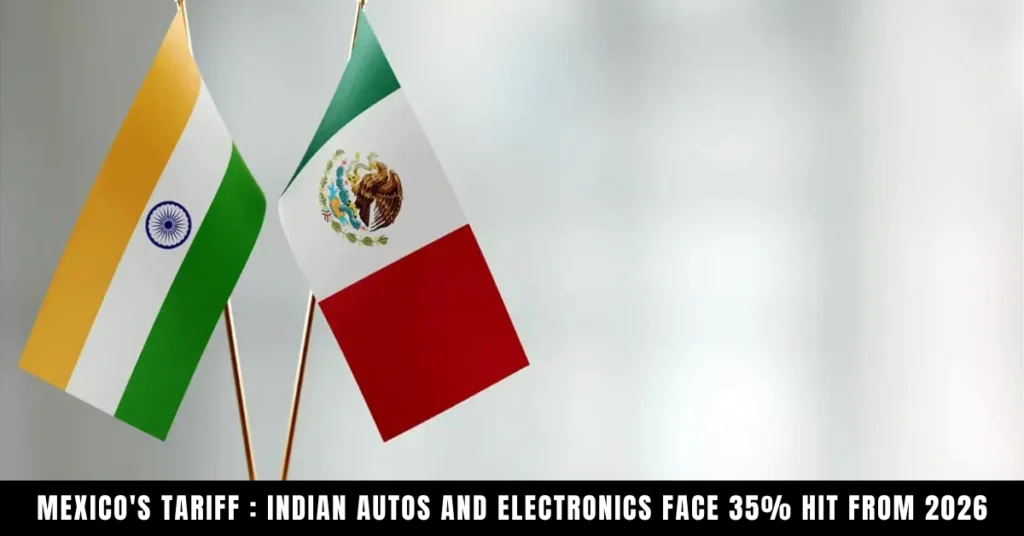
Indian exporters are staring at a challenging 2026 after Mexico’s Congress cleared a broad tariff hike on December 11, 2025, set to kick in from January 1. The new duties, ranging from 5% to as high as 35% (and higher in some cases), target imports from nations without free trade agreements—putting India squarely in the crosshairs. Analysts estimate this could disrupt nearly three-quarters of India’s shipments to Mexico, a market painstakingly built over years through integrated supply chains feeding North America’s USMCA bloc.
The move, WTO-compliant but strategically timed, aims to protect Mexican industry amid global trade tensions. For India, with USD 2.9 billion in annual exports (half of Mexico’s to India), the pain is concentrated in high-volume sectors like automobiles, electronics, and metals. As GTRI Founder Ajay Srivastava noted, “Tariffs rise steeply from 10-15 percent to 35 percent, disrupting India’s deep integration into Mexico-based automotive supply chains that serve the US market.”
This isn’t a minor tweak—it’s a reset that threatens volumes, margins, and hard-won brand presence for Indian firms.
Sector-Wise Impact: The Biggest Losers
| Sector | FY2025 Export Value (USD M) | Tariff Change | Key Concerns |
|---|---|---|---|
| Passenger Vehicles | 938.35 | 20% → 35% | Erodes competitiveness in USMCA-linked chains |
| Auto Components | 507.26 | Varies → up to 35% | Supply chain disruptions for North American assembly |
| Motorcycles | 390.25 | 20% → 35% | Threat to volumes and brand presence |
| Smartphones/Electronics | 284.53 | Up to 35% | Lost momentum in growing market |
| Industrial Machinery | 447.99 | 5-10% → 25-35% | Higher costs in price-sensitive segments |
| Aluminium | 383.25 | Significant hike | Weakens position vs regional/USMCA suppliers |
| Iron & Steel | 128.44 | 15% → 35% | Stalls expansion plans |
Automobiles and components, India’s top export category to Mexico, face the heaviest blow. Passenger vehicles and parts feed factories supplying the US and Canada under USMCA rules—higher duties could reroute orders to preferential suppliers. Motorcycles, a traditional Indian strength, risk sharp volume drops as 35% duties bite margins.
Electronics like smartphones were gaining traction but now confront up to 35% tariffs, potentially stalling recovery. Machinery exporters brace for 25-35% hikes from low bases, inflating project costs. Metals (aluminium, steel) see steep jumps, undermining competitiveness against bloc insiders.
FIEO and GTRI warn the hikes could undo years of market-building, with some duties reaching 50% in extreme cases for sectors like textiles, plastics, and chemicals.
Why Mexico Did This and What It Means
Mexico’s tariff reset protects domestic industry amid global uncertainties, positioning it as the second major economy (after the US) to raise WTO-compliant barriers disproportionately hitting Indian goods. For India, it’s a double whammy: lost price edge in a USD 2.9 billion market and strained multilateral trade ties.
Industry calls for urgency: a comprehensive India-Mexico trade pact to secure preferential access. Without it, exporters risk gradual erosion, especially in price-sensitive electronics and machinery.
GTRI’s Srivastava highlighted the automotive sting: Mexico-based plants serve US demand—higher Indian part costs could trigger reshoring or switches to USMCA sources.
Broader Trade Context
India’s exports to Mexico are modest globally but strategically vital for North American integration. The imbalance—Mexico exports twice as much to India—adds leverage, but concentrated impact in autos/metals amplifies pain.
Trade bodies urge a diplomatic push for negotiations, warning delays could lock in losses for years.
The Road Ahead: Adaptation or Negotiation
Short-term: Exporters may absorb costs, offer discounts, or explore warehousing to delay duties. Long-term: Diversify markets or accelerate FTA talks.
This tariff wall is a wake-up call—India’s export strategy must evolve faster in a fragmenting world. For now, autos, electronics, and metals brace for turbulence as 2026 dawns.
Source: www.alcircle.com
Read more about Ev Car News
Also Read
- MG Windsor Big Discounts Jan 2026: First-Ever Offers Make It Cheaper Than Launch Price
- JSW Motors To Enter Passenger Car Space In June With Rs 45 Lakh Plug-In Hybrid SUV
- Maruti Suzuki Second Car Plant Gujarat Investment: ₹4,960 Crore for 10 Lakh Unit Capacity
- India’s EV Sales Reach 2.3 Million Units in 2025, 8 Percent of New Vehicles: Strong Growth Led by Two-Wheelers

- VinFast Off to a Fast Start, Crosses 1k EV Sales in India: Milestone in Just Four Months

- What Happens To EV Battery After End-Of-Life?