GAC Solid-State Battery Breakthrough: November 2025 Pilot Line Highlights
- Cell Capacity: 60+ Ah large-format pouch cells—first in China for solid-state tech.
- Areal Capacity: Record 7.7 mAh/cm²—breaks conventional 5 mAh/cm² ceiling, enables thicker electrodes.
- Energy Density: Nearly 2X current lithium-ion—the same pack size could double the range (311 miles → 621 miles).
- Safety Edge: Solid electrolyte stable up to 300–400°C—virtually eliminates fire risk.
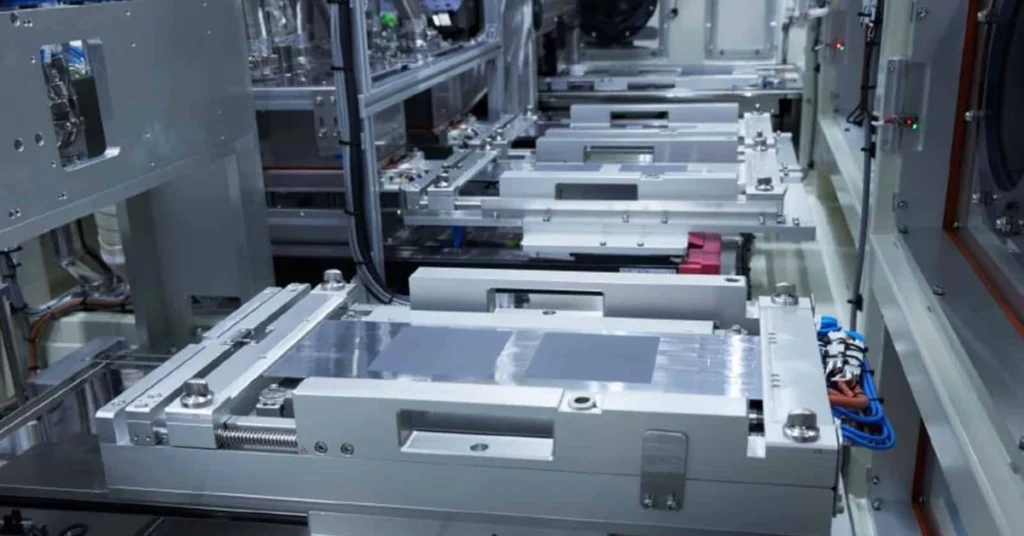
- Pilot Line Status: China’s first industrial-scale solid-state line; small-batch production for testing, not yet mass production.
- Timeline: In-vehicle testing 2026; commercial production targeted 2027–2030.
- Strategic Impact: Positions China head-to-head with Japan (Toyota), the US (QuantumScape), and Korea (Samsung SDI) in the solid-state race.
GAC Shatters Solid-State Barriers: 60+ Ah Cells with Double Energy Density Put China at the Forefront of Next-Gen EV Batteries
In a move that has sent shockwaves across the global EV industry, Guangzhou Automobile Group (GAC) has unveiled China’s first pilot production line for large-capacity solid-state battery cells exceeding 60 Ah—a technological leap that could fundamentally reshape electric mobility. Announced on November 25, 2025, and detailed by SaurEnergy, this breakthrough catapults China from lab-scale experiments straight into the early industrialization phase of solid-state technology, challenging long-held leads by Japan, the United States, and South Korea.
Beyond 60 Ah: What the Numbers Really Mean
While most current EV pouch cells hover between 40 and 50 Ah, GAC’s new solid-state cells push past 60 Ah with an astonishing areal capacity of 7.7 mAh/cm²—shattering the conventional ceiling of ~5 mAh/cm². This metric is crucial: higher areal capacity allows thicker electrodes that store dramatically more energy without cracking during manufacturing. Result? Fewer cells needed per pack, lower weight, reduced complexity, and ultimately cheaper, longer-range EVs.
GAC boldly claims these cells deliver nearly double the energy density of today’s best lithium-ion packs. In practical terms, a mid-size EV that currently achieves 500 km (311 miles) on a full charge could realistically hit 1,000 km (621 miles) with the same physical battery volume—without resorting to massive, heavy packs that compromise handling and efficiency.
Safety First: The Solid-State Superpower
Unlike traditional lithium-ion cells that rely on flammable liquid electrolytes, GAC’s solid-state design uses a ceramic or polymer solid electrolyte that remains stable even at 300–400°C. Thermal runaway and fire risks, the Achilles’ heel of current EVs, are virtually eliminated. Combined with higher voltage tolerance and faster charging potential, this makes solid-state the holy grail that automakers worldwide have chased for over a decade.
From Lab to Road: The 2026–2030 Roadmap
The new pilot line is not yet mass-production ready—it will initially churn out limited batches for rigorous testing. GAC plans to integrate these cells into real vehicles for on-road validation starting in 2026, with commercial-scale manufacturing eyed between 2027 and 2030. Success hinges on three pillars: market appetite for premium-range EVs, maturation of the solid-electrolyte supply chain, and continued cost reduction from today’s estimated $200–300/kWh down toward the $80–100/kWh parity target.
China Charges Ahead in the Global Race
For years, Toyota (2027–2028 target), QuantumScape (US), Samsung SDI, and LG Energy Solution have dominated solid-state headlines. GAC’s 60+ Ah pilot line changes that narrative overnight. Backed by state support and vertical integration (GAC owns its battery arm, Inpai), China now has a tangible industrial foothold—not just prototypes, but a functioning line capable of scaling.
As SaurEnergy aptly summarised: “This is seemingly the first step in bringing the country head-to-head with established players from Japan, the US, and Korea.”
When (not if) GAC cracks mass production, the ripple effects will be seismic: 1,000 km range becoming mainstream, faster charging, lighter vehicles, and a potential knockout blow to range anxiety. The solid-state era just got very real—and very Chinese.
Source: www.saurenergy.com
Read more about EV Car News
Also Read
- MG Windsor Big Discounts Jan 2026: First-Ever Offers Make It Cheaper Than Launch Price
- JSW Motors To Enter Passenger Car Space In June With Rs 45 Lakh Plug-In Hybrid SUV
- Maruti Suzuki Second Car Plant Gujarat Investment: ₹4,960 Crore for 10 Lakh Unit Capacity

- India’s EV Sales Reach 2.3 Million Units in 2025, 8 Percent of New Vehicles: Strong Growth Led by Two-Wheelers
- VinFast Off to a Fast Start, Crosses 1k EV Sales in India: Milestone in Just Four Months
- What Happens To EV Battery After End-Of-Life?
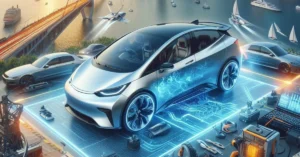
Catchy Single-Line Title for Image Text:
“GAC Drops Bomb: 60+ Ah Solid-State Cells – 1,000 km Range Coming 2026!”