Image Source: english.mathrubhumi.com
KSEB Calls for EoI Private Firms EV Charging Stations: Overview
- Kerala State Electricity Board (KSEB) invites Expressions of Interest (EoI) from private entrepreneurs to set up public EV charging stations under the Centre’s PM E-DRIVE Scheme.
- Eligible operators can receive up to an 80% subsidy on infrastructure costs (transformers, cables, switchgear, and civil works; excludes GST, deposits, and charger hardware).
- Applicants must have experience with at least 10 charging stations and one year of operations and can propose up to 50 locations (minimum two cents land).
- Preferred sites: highways, commercial zones, residential clusters, transit hubs.
- Applications via pmedrivekerala.kseb.in until January 5, 2026; the national target is 72,000 stations, and Kerala aims for 700.
KSEB Opens Doors for Private EV Charging Boom: 80% Subsidy Under PM E-DRIVE Attracts Entrepreneurs
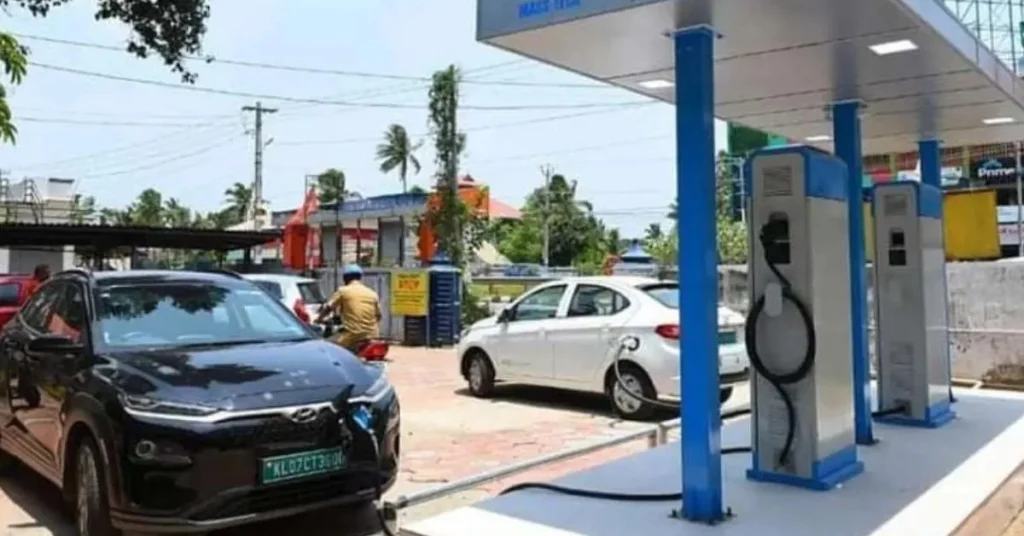
Kerala is accelerating its electric vehicle infrastructure drive with a major opportunity for private players. The Kerala State Electricity Board (KSEB), acting as the nodal agency for the state, has issued a call for Expressions of Interest (EoI) from entrepreneurs and companies to establish public electric vehicle charging stations across Kerala. This initiative falls under the Centre’s ambitious PM Electric Drive Revolution in Innovative Vehicle Enhancement (PM E-DRIVE) Scheme, which aims to create a robust nationwide charging network to support growing EV adoption.
The scheme offers attractive financial incentives: successful applicants can claim up to 80% subsidy on key infrastructure components such as transformers, cables, switchgear, and civil works. Notably, the subsidy excludes GST, refundable deposits, and the cost of actual charging equipment (EVSE). Since infrastructure often forms the bulk of project expenditure, this support significantly lowers entry barriers for private operators.
To ensure quality and reliability, KSEB has set clear eligibility criteria. Interested agencies must demonstrate prior experience by having set up at least 10 charging stations and operated them for a minimum of one year. Each applicant can propose up to 50 locations, with each site requiring at least two cents (approximately 80 square meters) of available land. Preferred locations include high-traffic areas like highways, expressways, commercial complexes, market zones, residential clusters, and transit hubs—places where drivers can conveniently charge during travel or daily routines.
Applications are accepted through a dedicated online portal at pmedrivekerala.kseb.in until January 5, 2026. For queries, applicants can contact KSEB at 0471 2514222.
National and State Targets: Scaling Up Charging Infrastructure
The PM E-DRIVE Scheme carries a national allocation of INR 2,000 crore specifically for public charging stations. At the country level, the Union Ministry of Heavy Industries targets 72,000 new stations, while Kerala aims to contribute 700 as part of its state-specific rollout.
KSEB will evaluate submissions and shortlist eligible proposals, but final approvals, project selection, and subsidy disbursal remain with the Union Ministry of Heavy Industries. This structured process ensures transparency and alignment with central guidelines.
Why This Opportunity Matters for Private Players
Setting up charging stations has long been capital-intensive due to land, power connections, and civil works. The 80% subsidy on these elements makes projects far more viable, especially for startups and small enterprises. With EV sales rising steadily in Kerala—driven by two-wheelers, three-wheelers, and growing passenger car interest—demand for reliable public charging is surging.
Preferred sites focus on convenience: highways for inter-city travel, commercial areas for quick top-ups during shopping or work, and residential zones for overnight or community charging. This strategic placement will reduce range anxiety and encourage more drivers to switch to electric.
Kerala’s Broader EV Push
KSEB’s EoI is part of a larger state effort to build a comprehensive EV ecosystem. From promoting electric buses to expanding renewable energy integration, Kerala is positioning itself as a leader in sustainable mobility. The involvement of private firms ensures faster rollout and diverse business models, from pay-per-use to subscription plans.
For entrepreneurs, this is a timely chance to enter a growing market backed by substantial government support. Successful applicants will not only benefit from subsidies but also contribute to cleaner air and reduced fuel imports.
The Road Ahead: From EoI to Operational Stations
With the application window closing on January 5, 2026, interested parties have a short but crucial period to prepare proposals. KSEB’s facilitation through a dedicated portal simplifies the process, while the central subsidy framework provides financial certainty.
As India targets widespread EV adoption, initiatives like this in Kerala show how states and private players can collaborate to build the infrastructure needed for a greener tomorrow. The PM E-DRIVE call is more than funding—it’s an invitation to shape the future of mobility in the state.
Source: english.mathrubhumi.com
Read more about Ev Car News
Also Read
- MG Windsor Big Discounts Jan 2026: First-Ever Offers Make It Cheaper Than Launch Price
- JSW Motors To Enter Passenger Car Space In June With Rs 45 Lakh Plug-In Hybrid SUV
- Maruti Suzuki Second Car Plant Gujarat Investment: ₹4,960 Crore for 10 Lakh Unit Capacity
- India’s EV Sales Reach 2.3 Million Units in 2025, 8 Percent of New Vehicles: Strong Growth Led by Two-Wheelers
- VinFast Off to a Fast Start, Crosses 1k EV Sales in India: Milestone in Just Four Months

- What Happens To EV Battery After End-Of-Life?