Image source: electrive.com
BMW Munich Plant Prepares for New i3 Production: Overview
- BMW Group Plant Munich successfully completes dry-run functional checks on new manufacturing equipment for the upcoming BMW i3 electric sedan.
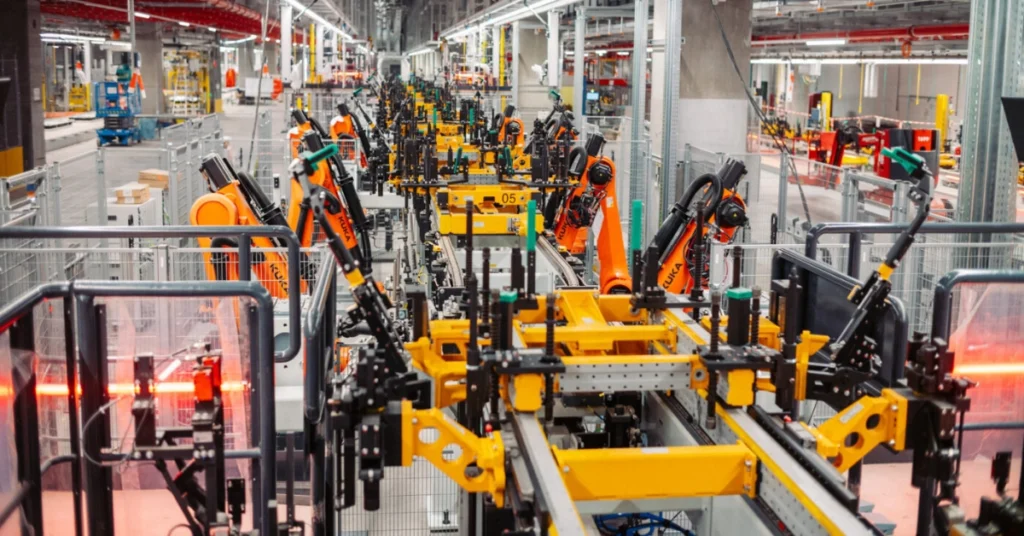
- Production planners and technicians tested every cycle without vehicle parts to ensure seamless operation.
- i3 assembly shifts from the Research and Innovation Centre to the Munich plant in January 2026, with series production starting in summer 2026.
- Remodelling of one-third of the site over 18 months, including a new body shop, assembly hall, and logistics centre, carried out while maintaining daily output of up to 1,000 BMW 3/4 Series vehicles.
- Digital planning via the BMW Virtual Factory approach integrated new and existing facilities.
BMW Munich Plant Gears Up for i3 Era: Successful Dry-Run Tests Mark Major Milestone
BMW Group Plant Munich is reaching a pivotal moment in its historic transformation into a hub for next-generation electric vehicles. The facility has successfully completed functional checks on its newly installed manufacturing equipment, paving the way for series production of the all-new BMW i3 electric sedan. These dry-run tests involved running the entire production process cycle by cycle without actual vehicle parts, allowing planners and technicians to verify that every machine, robot, and system operates perfectly in harmony.
This thorough validation is a critical step before real vehicles roll down the line. The checks ensure reliability, precision, and efficiency from day one of production. Once complete, the plant will shift assembly of the i3 from BMW’s Research and Innovation Centre to Munich starting in January 2026, with full series production beginning in summer 2026. The i3, built on the innovative Neue Klasse platform, will become one of BMW’s flagship locally produced electric models, bringing cutting-edge EV manufacturing right to the heart of the company’s original home facility.
Over the past 18 months, BMW has undertaken an ambitious remodelling project, redeveloping approximately one-third of the Munich site. Older halls were carefully dismantled and replaced with a modern assembly hall, an advanced body shop, and a new logistics centre. Remarkably, this extensive construction was carried out while the plant continued its daily rhythm, producing up to 1,000 BMW 3 Series and 4 Series vehicles without major disruptions.
Virtual Planning Meets Real-World Precision
The entire upgrade was digitally planned using BMW Group’s Virtual Factory approach. Engineers created a complete digital twin of the facility, integrating both the new body shop and assembly line with the existing press shop and paint shop. This virtual model allowed teams to simulate and validate every production process long before physical installation began. The result is a highly optimised layout that maximises space, flow, and flexibility for future electric models.
The dry-run success confirms that the virtual planning translated perfectly into reality. Every station, from body welding to final assembly, performed as designed, giving BMW confidence in a smooth ramp-up when i3 production starts.
Munich Plant’s Historic Role in BMW’s Electric Future
BMW’s Munich plant, the company’s birthplace since 1922, is evolving while honouring its legacy. By bringing Neue Klasse production in-house, BMW ensures the i3 benefits from decades of manufacturing expertise and quality standards. The facility will play a central role in the brand’s electrification strategy, producing vehicles that combine driving pleasure with sustainable mobility.
The transition also highlights BMW’s commitment to its workforce and region. The project created new skilled positions in EV-specific processes while preserving jobs through continuous operation during remodelling.
What This Means for BMW’s EV Lineup
The i3 is the first production model on the Neue Klasse platform, promising advancements in range, charging speed, digital features, and efficiency. Its arrival in Munich production solidifies BMW’s plan to have multiple Neue Klasse models rolling out in the coming years.
For customers, it means BMW’s electric vehicles will continue to carry the brand’s signature dynamics and premium quality, now backed by a factory optimised for the electric age.
The Bigger Picture: BMW’s Balanced Path to Electrification
While competitors rush or retreat on EVs, BMW is taking a measured, technology-driven approach. The Munich plant upgrade shows serious investment in electric production without abandoning the company’s roots in combustion excellence—the 3 and 4 Series continue alongside.
As the i3 prepares to enter series production in summer 2026, Munich stands ready to deliver BMW’s vision of joyful, sustainable driving to the world.
Source: indianautosblog.com
Read more about Upcoming Ev Cars
Also Read
- Genesis GV60 Magma Debut: First High-Performance Electric Vehicle Revealed at CES 2026
- Mazda CX-6e Electric SUV Debuts at Brussels Motor Show: Premium Compact EV Revealed
- BMW to Launch Three New EV Models in India to Boost Sales: Targeting 25% EV Share in 2026
- Toyota Urban Cruiser EV India Launch On January 19th: Specs, Features, and Expected Pricing
- Renault Twingo E-Tech Electric Debuts at Brussels Motor Show: €19,490 Affordable City EV
- Mahindra XUV 3XO EV Launched At Rs 13.89 Lakh: Full Specs, Features, and Segment-Beating Performance