Image source: cmv360.com
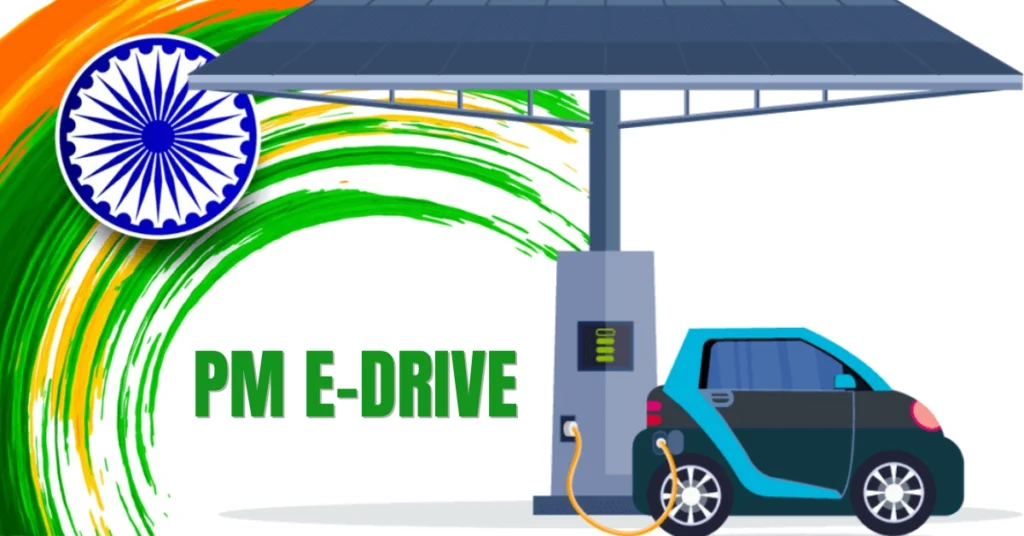
PM E-DRIVE Delivers 1.13 Million Vehicles Reduced Subsidies: Overview
- PM E-DRIVE achieves 1.13 million EV deliveries in the first year with half the per-vehicle subsidy of FAME II, signaling market maturity.
- Annualised volumes are 3.4 times higher than FAME II despite lower incentives (INR 5,000/kWh).
- Total EV sales FY25: 1.96 million units, penetration 7.49%; 15-fold growth since FY20.
- Two-wheelers dominate 80-85%; there are regional disparities, with Delhi/Goa leading and Bihar/Tripura e-3W heavy.
- Charging infra doubles to INR 20 billion; expands to e-trucks, e-ambulances, Aadhaar e-vouchers, and scrappage incentives.
PM E-DRIVE Proves EV Market Maturity: 1.13 Million Vehicles with Slashed Subsidies
India’s electric vehicle push has hit a new milestone of efficiency and scale. The PM E-DRIVE scheme, in its debut year, delivered 1.13 million electric vehicles while offering just half the per-vehicle subsidy compared to its predecessor, FAME II, according to a CEEW study, “Navigating India’s Electric Mobility Transition: Market Dynamics to Policy Shifts,” released on December 17, 2025. This feat translates to 3.4 times higher annualised volumes despite the incentive cut to INR 5,000 per kilowatt-hour, proving parts of the EV ecosystem are becoming self-sustaining and less reliant on heavy government crutches.
Overall EV sales in FY25 reached 1.96 million units, pushing penetration to 7.49%—a staggering 15-fold increase since FY20’s nascent days. The shift is clear: from e-rickshaw dominance in early years to electric two-wheelers now claiming over 1.15 million units and 80-85% market share. Commercial four-wheelers are gaining traction in logistics and shared mobility, while premium passenger EVs with 500+ km range snag 27% of their segment by mid-2025.
Karthik Ganesan, Fellow and Director of Strategic Partnerships at CEEW, highlighted the significance: “Delivering over a million electric vehicles with lower per-unit incentives indicates parts of the market are becoming self-sufficient. Future policy must focus on coherence, infrastructure readiness, and targeted interventions rather than assuming uniform adoption nationwide.”
FAME II vs PM E-DRIVE: Key Performance Comparison
| Parameter | FAME II (FY20-FY24) | PM E-DRIVE (FY25-FY28 Projection) |
|---|---|---|
| Total Outlay | INR 115 billion | INR 109 billion |
| Time Period | 5 years | 1.5 years, extendable to 3.5 years |
| Vehicle Categories | E2W, E3W, E4W, E-buses | E2W, E3W, E-buses, E-ambulances, E-trucks |
| Vehicles Supported | 1.56 million | 2.85 million |
| Volume Achieved (Annualised) | 0.33 million | 1.13 million |
PM E-DRIVE’s leaner subsidies yet higher output show maturity—markets respond to ecosystem strength, not just cash.
Segment and Regional Insights
- Two-Wheelers: 1.15 million units in FY25; affordable, urban-friendly.
- Commercial E-3W: Exceeded targets at 153%.
- E-2W: 95% of targets.
- E-Rickshaws/E-Carts: Only 5% achieved.
Regional divides persist: High-income states like Delhi, Goa, and Karnataka show diversified adoption (E2W penetration 5x lower-income peers). Bihar and Tripura rely on E3W for 52%+ penetration.
PM E-DRIVE Enhancements
- Charging Infra: Doubled to INR 20 billion.
- New Categories: E-trucks, e-ambulances.
- Localisation: Aadhaar e-vouchers.
- Scrappage Incentives: For e-buses/trucks.
Recommendations for Sustained Growth
The study urges:
- Embed 30% EV target by 2030 in national policy with sub-targets.
- State-level goals to bridge disparities.
- Expanded PM E-DRIVE dashboard for transparency.
- Dynamic budget recalibration for high-demand segments.
- Focus on MSMEs, public fleets, and rural/informal operators.
With India’s auto sector at 7.1% GDP and 30 million jobs, this transition is economic as much as environmental.
The Road to Self-Sustaining EVs
PM E-DRIVE’s success with reduced subsidies is a coming-of-age for India’s EV market. As TCO parity hits more segments and infrastructure grows, adoption will accelerate organically. The CEEW report is a roadmap: targeted, data-driven policies over blanket incentives.
India’s EV story is evolving from subsidy-dependent to ecosystem-driven—and the numbers prove it’s working.
Source: autocarpro.in
Also Read
- MG Windsor Big Discounts Jan 2026: First-Ever Offers Make It Cheaper Than Launch Price
- JSW Motors To Enter Passenger Car Space In June With Rs 45 Lakh Plug-In Hybrid SUV
- Maruti Suzuki Second Car Plant Gujarat Investment: ₹4,960 Crore for 10 Lakh Unit Capacity

- India’s EV Sales Reach 2.3 Million Units in 2025, 8 Percent of New Vehicles: Strong Growth Led by Two-Wheelers
- VinFast Off to a Fast Start, Crosses 1k EV Sales in India: Milestone in Just Four Months
- What Happens To EV Battery After End-Of-Life?