Image source: kpmg.com
India EV Sales Projected 22 Million Units by 2035 : Overview
- India’s electric vehicle sales are projected to reach 22 million units by 2035, with penetration exceeding 50% across most segments, per the KPMG report “Securing the Supply Chain: Preparing for the Electric Vehicle Raw Material Challenge.”
- EV sales hit 1.5 million units in FY25, up from 0.7% penetration in 2020 to 5.9% in 2025.
- Two-wheelers dominate with an 80-85% share; passenger EVs gain momentum, with premium models offering 500+ km range capturing 27% of segment sales.
- EVs achieve total cost of ownership parity in scooters, three-wheelers, intracity buses, and commercial four-wheelers; personal cars are expected soon.
- Public charging stations grew from 5,000 in 2022 to over 26,000 by early 2025; the FAME and PM E-DRIVE schemes drive adoption.
- The report highlights supply chain risks for critical minerals: China controls 70-80% of the refining of lithium/cobalt and 90% of rare earths; export controls on graphite, gallium, and others pose threats.
- Recommends a four-pronged strategy: trade deals, domestic processing, recycling, and innovation in LFP Gen 4, sodium-ion, and solid-state batteries.
India’s EV Journey: 22 Million Sales by 2035 and the Raw Material Challenge
India’s electric vehicle market is accelerating at breakneck speed. According to the latest KPMG report, “Securing the Supply Chain: Preparing for the Electric Vehicle Raw Material Challenge,” released on December 16, 2025, the country is poised for 22 million EV sales by 2035, with penetration crossing 50% in most segments. This ambitious trajectory, driven by high fuel prices, new model launches, and strong government backing, positions EVs as the dominant force in India’s mobility future.
In FY25 alone, India sold 1.5 million EVs, pushing penetration from 0.7% in 2020 to 5.9% in 2025. Two-wheelers lead the pack, accounting for 80-85% of sales thanks to affordability and urban suitability. Passenger vehicles are gaining fast, with premium EVs offering 500+ km range now capturing 27% of segment sales by mid-2025. Total cost of ownership advantages are already clear in scooters, three-wheelers, intracity buses, and commercial four-wheelers, while personal cars are expected to reach parity before the decade ends.
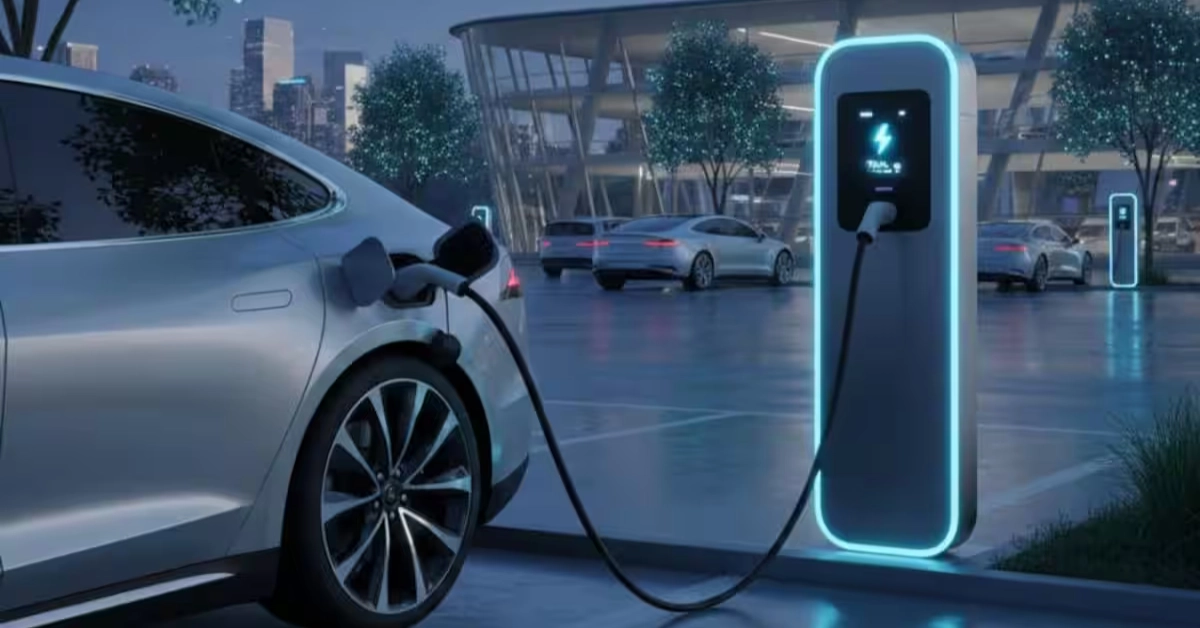
Public charging infrastructure has expanded dramatically from 5,000 stations in 2022 to over 26,000 by early 2025. Schemes like FAME and PM E-DRIVE (launched September 2024 with INR 10,900 crore) have been key enablers, making EVs more accessible and practical.
The Raw Material Challenge: Supply Chain Vulnerabilities
The report shines a spotlight on a critical bottleneck: the supply chain for critical minerals needed for EV batteries and motors. EVs require six times more mineral inputs than conventional vehicles, with lithium, cobalt, nickel, graphite, and rare earths playing pivotal roles.
Global reserves are highly concentrated:
- Lithium: Australia, Chile, Argentina.
- Cobalt and nickel: Democratic Republic of Congo, Indonesia.
- China dominates refining: 70-80% lithium/cobalt and 90% rare earths.
Recent Chinese export controls on graphite, gallium, germanium, antimony, tungsten, and others have slowed gigafactory builds and raised costs. Price volatility adds risk: lithium prices spiked eightfold in FY22 before dropping 80% since 2023.
India has resources—5.9 million tons of lithium in Jammu & Kashmir, 45 million tons of cobalt-bearing, 189 million tons of nickel-bearing, and the third-largest rare earth reserves globally—but lacks proven reserves and large-scale processing.
Technological Breakthroughs and India’s Response
The report highlights promising innovations:
- LFP Gen 4 cells exceed 300 Wh/kg, offering longer ranges and lower costs.
- Sodium-ion batteries eliminate lithium for low-cost applications.
- Solid-state batteries are expected by 2027 for higher density and safety.
- Magnet-free motors reduce rare earth dependence.
India’s strategy includes:
- National Critical Mineral Mission (INR 16,300 crore, INR 18,000 crore public investment FY25-FY31).
- Overseas asset acquisitions via a dedicated Ministry of Mines company.
- Collaborations with Argentina and Australia.
- Battery Waste Management Rules and INR 1,500 crore recycling incentives.
- PLI schemes for advanced chemistry cells.
Outlook and Recommendations
EVs are the most scalable clean mobility path, outperforming hybrids and hydrogen on cost and infrastructure. The shift could drive 20-30% more renewable electricity by 2035. Success hinges on securing minerals, scaling processing, and innovating chemistries.
The report calls for a four-pronged approach:
- Short-term: trade deals, overseas acquisitions.
- Medium-term: processing parks, recycling, and R&D partnerships.
- Long-term: integrated supply chains and skill development.
India’s EV story is one of opportunity and risk. With the right moves, the country can turn mineral constraints into a catalyst for self-reliance and global leadership.
Source: autocarpro.in
Read more about EV Car News
Also Read
- MG Windsor Big Discounts Jan 2026: First-Ever Offers Make It Cheaper Than Launch Price
- JSW Motors To Enter Passenger Car Space In June With Rs 45 Lakh Plug-In Hybrid SUV
- Maruti Suzuki Second Car Plant Gujarat Investment: ₹4,960 Crore for 10 Lakh Unit Capacity
- India’s EV Sales Reach 2.3 Million Units in 2025, 8 Percent of New Vehicles: Strong Growth Led by Two-Wheelers
- VinFast Off to a Fast Start, Crosses 1k EV Sales in India: Milestone in Just Four Months
- What Happens To EV Battery After End-Of-Life?