LG Energy Solution $1.4 Billion EV Battery Deal: Overview
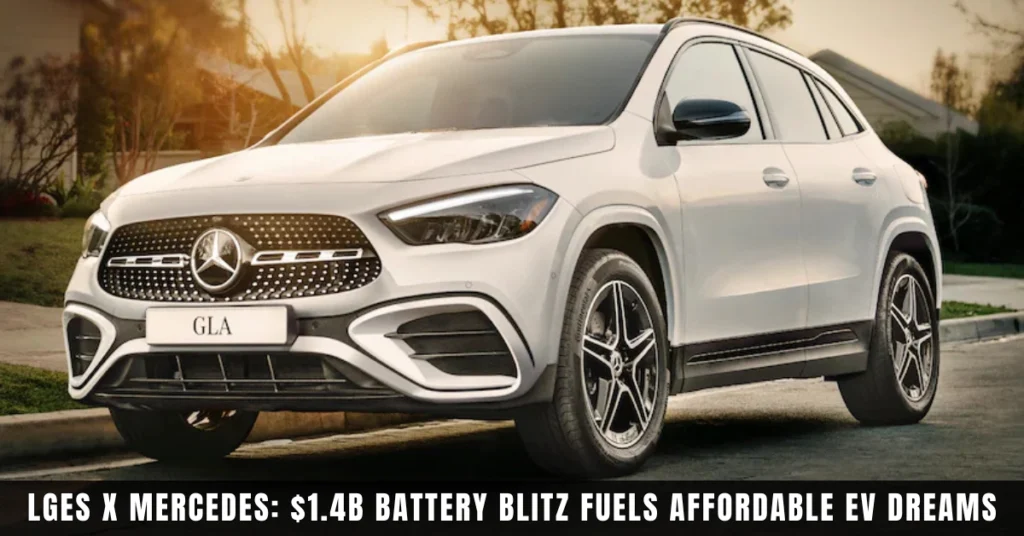
- LG Energy Solution inks a $1.4 billion (2.06 trillion won) deal to supply EV batteries to Mercedes-Benz from March 2028 to June 2035, targeting North America and Europe.
- Marks the fourth major contract in two years, bringing total commitments to $16 billion and 107 GWh from prior deals.
- Likely focuses on LFP (lithium iron phosphate) batteries for mid- to entry-level EVs, supporting Mercedes’ shift to affordable models.
- Builds on September’s 107 GWh agreement (75 GWh to subsidiaries, 32 GWh to Mercedes AG); previous deals emphasized high-performance 46-series cylindrical batteries.
- Strategic tie-up counters Chinese low-cost competition, with production at LG’s US and Europe plants; follows November 2025 meeting between CEOs.
LG Energy Solution and Mercedes-Benz Seal Another Mega Battery Deal: $1.4 Billion for the EV Future
In a move that underscores the accelerating global race for electric supremacy, South Korea’s LG Energy Solution (LGES) announced on December 8, 2025, a landmark $1.4 billion (2.06 trillion won) contract to supply electric vehicle batteries to Germany’s iconic Mercedes-Benz. This seven-year agreement, spanning March 1, 2028, to June 30, 2035, will deliver cutting-edge power packs to Mercedes’ assembly lines in North America and Europe, fueling everything from sleek sedans to rugged SUVs. It’s the fourth blockbuster deal between the duo in just two years, pushing their cumulative battery commitments to a staggering $16 billion and solidifying LGES as Mercedes’ go-to battery powerhouse.
This partnership is more than ink on paper—it’s a symphony of innovation, where Korean precision meets German engineering to tackle the EV world’s toughest challenges: affordability, range, and sustainability. As Mercedes ramps up its electrification offensive with over 40 new EV models by 2027, this deal arrives at a pivotal moment, helping the luxury giant democratize electric driving without sacrificing its signature performance. For LGES, it’s a revenue rocket—the contract equals about 8% of its 2024 haul of 25.62 trillion won—and a vote of confidence in its diverse battery lineup, from high-end cylindrical cells to cost-effective LFP packs.
Deal Breakdown: Scope, Timeline, and Battery Focus
| Deal Aspect | Details |
|---|---|
| Value | $1.4 billion (2.06 trillion won); potential adjustments based on talks |
| Duration | 7 years: March 1, 2028–June 30, 2035 |
| Regions | North America and Europe |
| Estimated Volume | 15-20 GWh (industry speculation); likely LFP for mid/entry EVs |
| Production Sites | LGES plants in US (e.g., Michigan) and Europe (e.g., Poland) |
| Prior Cumulative | $16 billion total; 107 GWh from September 2025 (75 GWh subsidiaries + 32 GWh Mercedes AG) |
Unlike earlier pacts heavy on premium 46-series cylindrical batteries for high-performance beasts like the EQS or EQE, this one is poised to power Mercedes’ push into mid- and entry-tier EVs. Analysts point to lithium iron phosphate (LFP) chemistry—safer, cheaper, and longer-lasting than traditional nickel-based cells—as the star here. LFP’s rise aligns with Mercedes’ September 2025 electrification roadmap, which eyes broader appeal amid softening luxury EV demand. By blending LGES’s pouch, prismatic, and cylindrical formats, the deal ensures versatility: high-voltage mid-nickel for speed demons and LFP for everyday affordability.
This flexibility is LGES’s secret sauce. Their portfolio spans the spectrum—from energy-dense 46-series for torque-hungry flagships to robust LFP units that handle real-world abuse without the fire risks of richer chemistries. Production at localized plants dodges tariffs and slashes logistics costs, making Mercedes’ EVs more competitive against Tesla’s mass-market blitz or BYD’s budget bombs.
A Partnership Forged in Innovation: From Talks to Tangible Wins
The ink was barely dry from September’s 107 GWh mega-deal when momentum built further. In mid-November 2025, Mercedes Chairman Ola Källenius jetted to Seoul for high-level huddles with LGES CEO Kim Dong-myung and execs from LG affiliates like LG Display and LG Innotek. Källenius gushed about their shared “vision rooted in innovation, quality, and sustainability,” vowing to “set new standards in the global auto industry.” These chats weren’t chit-chat—they paved the way for integrated solutions, from batteries to displays and semiconductors, turning Mercedes vehicles into rolling tech ecosystems.
Over two years, the duo’s synergy has snowballed:
- 2023: Initial high-volume cylindrical supply for premium EVs.
- 2024: Expanded to subsidiaries, hitting 50.5 GWh.
- September 2025: 107 GWh blockbuster, blending premium and volume.
- December 2025: This $1.4B pivot to affordable tiers.
For Mercedes, it’s a hedge against volatility—luxury sales dipped amid economic jitters, but entry-level EVs could unlock millions of new buyers. LGES, fresh off Q3 2025 profits of 601.3 billion won ($410 million) on 5.7 trillion won revenue, uses this to rebound from earlier losses tied to EV slowdowns and US policy shifts.
Strategic Edge: Battling Chinese Rivals and Boosting Global Footprint
In the cutthroat battery arena, where Chinese giants like CATL and BYD wield low-cost LFP swords, this deal is LGES’s counterstrike. Korean makers have ceded ground in Europe to Beijing’s pricing blitz, but Mercedes’ vote of confidence—prioritizing quality over rock-bottom bids—helps reclaim turf. LFP focus is savvy: it’s exploding in popularity for its cobalt-free ethics, thermal stability, and 3,000+ cycle life, ideal for fleet ops and daily drivers.
For Mercedes, diversifying suppliers mitigates risks like the 2023-24 battery recalls that plagued rivals. LGES’s RE100 and EV100 commitments—100% renewable ops by 2030—align with Mercedes’ carbon-neutral ambitions, ensuring eco-credentials match luxury badges.
| Competitive Landscape | LGES Strengths | Market Impact |
|---|---|---|
| Vs. Chinese (CATL/BYD) | Premium quality, localized production, diverse chemistries | Regains Europe’s share; counters price wars |
| Vs. Panasonic/Samsung SDI | Scale (3rd globally), LFP expertise, integrated LG ecosystem | Secures Mercedes’ mid-tier pivot |
| EV Trends | Affordable models rising; LFP demand up 50% YoY | $16B pipeline positions for 2030 boom |
Broader Implications: Powering the EV Revolution Worldwide
This pact ripples far beyond Stuttgart or Seoul. For consumers, it means more attainable Mercedes EVs—think a sub-$50K EQB with 400+ mile range, sans premium price tag. Globally, it accelerates the shift: EVs could hit 40% market share by 2030, slashing emissions and oil dependence. LGES’s profitability turnaround—second straight black quarter—signals industry stabilization post-2024 slump.
Yet challenges loom: raw material volatility, geopolitical tariffs, and scaling LFP without quality dips. Still, with Mercedes’ 40-model onslaught and LGES’s 20 GWh+ annual capacity ramps, this duo is wired for wins.
Source: republicworld.com
Read more about EV Car News
Also Read
- MG Windsor Big Discounts Jan 2026: First-Ever Offers Make It Cheaper Than Launch Price
- JSW Motors To Enter Passenger Car Space In June With Rs 45 Lakh Plug-In Hybrid SUV
- Maruti Suzuki Second Car Plant Gujarat Investment: ₹4,960 Crore for 10 Lakh Unit Capacity
- India’s EV Sales Reach 2.3 Million Units in 2025, 8 Percent of New Vehicles: Strong Growth Led by Two-Wheelers
- VinFast Off to a Fast Start, Crosses 1k EV Sales in India: Milestone in Just Four Months
- What Happens To EV Battery After End-Of-Life?
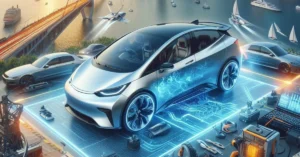
Catchy Title for the Image: “LGES x Mercedes: $1.4B Battery Blitz Fuels Affordable EV Dreams”