JSW-MG and Skoda-VW India Partnership Talks: November 2025 Update
- Core Focus: Sharing platforms, powertrains, and future tech (ICE, hybrid, EV); Skoda-VW eyes €1B investment for India-specific CMP21 SUV lineup.
- Stage: Early exploratory talks; no formal negotiations yet—strategic fit assessment ongoing.
- Three-Way Angle: Potential The JSW–MG–SAIC–Skoda-VW structure leverages the China JV and eases tech exchange and model sourcing.
- Skoda-VW Drivers: Need capital, scale for next-gen SUVs (mid-2027 debut); Mahindra talks collapsed in 2024 over valuation/IP.
- JSW Ambitions: Builds JSW-MG (70–80% EV sales target) + standalone JSW Auto EV brand (2027–28 launch); Chery talks stalled on data/tech.
- Market Context: India is the #3 global auto market; the EV/hybrid shift demands cost-sharing amid localization and BS7 norms.
- Timeline: CMP21 SUVs in mid-2027; partnership could unlock VW’s 2% share growth vs. Tata/Mahindra dominance.
- Stakeholder Views: Klaus Zellmer (Skoda CEO): Partnerships for “cultural alignment, business goals.”
JSW-MG and Skoda-VW India Partnership Talks Heat Up: A €1 Billion EV Gamble That Could Redefine Alliances in the World’s Third-Largest Auto Market
India’s automotive chessboard is getting a dramatic reconfiguration, with JSW-MG Motor India and Skoda Auto Volkswagen India (SAVWIPL) diving into early-stage discussions that could forge one of the subcontinent’s most intriguing cross-border collaborations. As revealed by industry insiders to Autocar Professional on November 21, 2025, the talks revolve around sharing vehicle platforms, powertrains, and cutting-edge technologies—a pragmatic response to skyrocketing EV development costs, localization mandates, and the relentless push for scale in a market now ranking as the world’s third-largest passenger vehicle arena.
These aren’t pie-in-the-sky fantasies; they’re survival imperatives. With India’s EV sales exploding to 2.5 million units in FY25 and stricter BS7 emission norms looming in 2027, global giants like Volkswagen are recalibrating. SAVWIPL, VW Group’s Indian outpost, has been hunting for a local anchor for over a year, slashing its bespoke EV platform budget from €1.1 billion to €700 million amid stalled Mahindra parleys. JSW Group, the steel-to-EV conglomerate that’s already turbocharging MG Motor India via a 35% stake, emerges as the frontrunner—blending Indian industrial muscle with European precision and, potentially, Chinese electrification savvy.
The Strategic Calculus: Platforms, Power, and a Possible Three-Way Tango
At the heart of the chatter? Co-development of the CMP21 platform—a flexible architecture for ICE, hybrids, and full EVs underpinning Skoda-VW’s next-gen SUV offensive, slated for mid-2027 debuts. This isn’t casual brainstorming; executives confirm “preliminary conversations” assessing fit for shared R&D, supply chains, and capex—all while navigating VW’s €1 billion India commitment for localized growth beyond its stagnant 2% share.
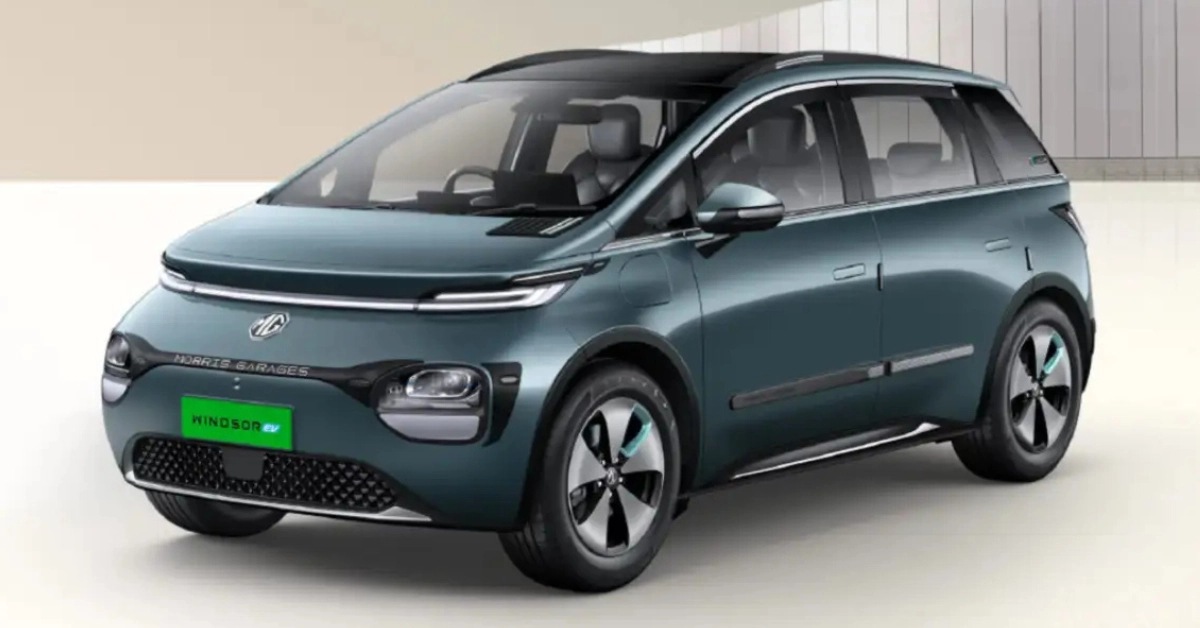
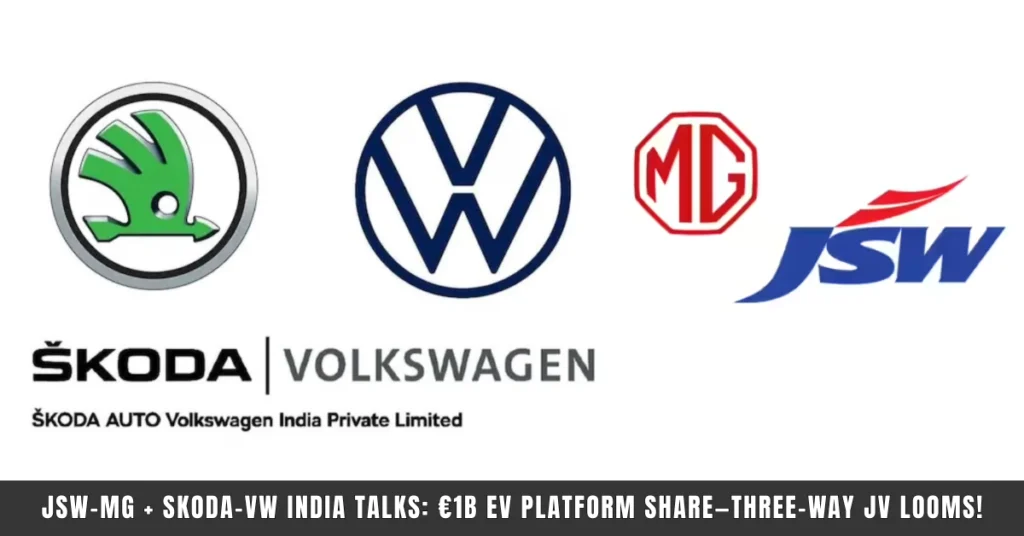
Intrigue amps up with a floated three-way JSW–MG–SAIC–Skoda-VW framework. SAIC (MG’s parent) and VW already dance in China via their JV, easing tech swaps for batteries, motors, and software. For JSW, it’s a masterstroke: Bolster its JSW-MG EV-heavy lineup (targeting 70–80% electric sales) while nurturing standalone JSW Auto’s 2027–28 EV brand launch—despite snags in separate Chery talks over data rights. Imagine: European chassis tuning, Chinese battery wizardry, and Indian assembly scale—birthing affordable SUVs under the Skoda Kushaq or MG ZS badges, priced sub-₹15 lakh to challenge the Tata Nexon EV and Maruti Fronx.
Skoda-VW’s India Imperative: From Lone Wolf to Local Lion
VW’s Indian saga—20 years, billions sunk, yet ~2% share—screams for reinvention. Klaus Zellmer, Skoda’s global CEO, admitted at the Munich Mobility Show, “Partnerships remain a strategic option to combine cultural alignment with business goals.” Mahindra’s 2024 flop (valuation clashes, IP guards) pivoted VW toward JSW, whose Halol plant (MG’s EV hub) offers ready infrastructure. Contract manufacturing whispers add flexibility—CKD imports via the potential EU-India FTA could bridge gaps.
For JSW, it’s diversification gold: From steel mills to EV empires, layering VW’s engineering atop SAIC’s batteries accelerates Parth Jindal’s multi-tech pacts. Risks? Geopolitics (VW-SAIC China ties amid US tariffs), exclusivity snags, and execution in price-sensitive India.
The Stakes: Reshaping India’s $100 Billion Auto Pie
India’s PV market—4.4 million units in FY25, eyeing 7 million by 2030—demands alliances. EVs at 15% penetration by 2030 mean shared costs are non-negotiable amid FAME-III subsidies and BS7 rules. A JSW-VW pact could mint 2–3 lakh units/year, blending Skoda’s premium play with MG’s volume – a counter to the Tata-Mahindra duopoly.
As Autocar India noted on November 21, 2025: “Exploratory cooperation on platforms, powertrains, and future technologies.” If it gels, this odd-couple union—Euro rigor, Indian scale, and Chinese electrons—might just turbocharge India’s auto renaissance.
Source: www.autocarpro.in
Read more about EV Car News
Also Read
- MG Windsor Big Discounts Jan 2026: First-Ever Offers Make It Cheaper Than Launch Price
- JSW Motors To Enter Passenger Car Space In June With Rs 45 Lakh Plug-In Hybrid SUV
- Maruti Suzuki Second Car Plant Gujarat Investment: ₹4,960 Crore for 10 Lakh Unit Capacity
- India’s EV Sales Reach 2.3 Million Units in 2025, 8 Percent of New Vehicles: Strong Growth Led by Two-Wheelers
- VinFast Off to a Fast Start, Crosses 1k EV Sales in India: Milestone in Just Four Months
- What Happens To EV Battery After End-Of-Life?