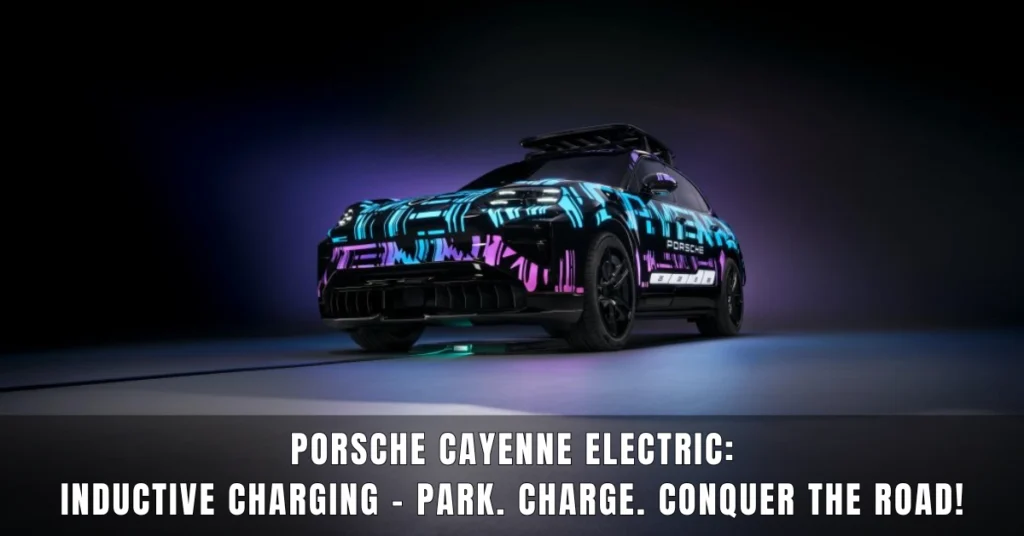
Porsche Cayenne Electric Inductive Charging
- World First: Porsche debuts 11 kW wireless inductive charging for Cayenne Electric—no cables needed.
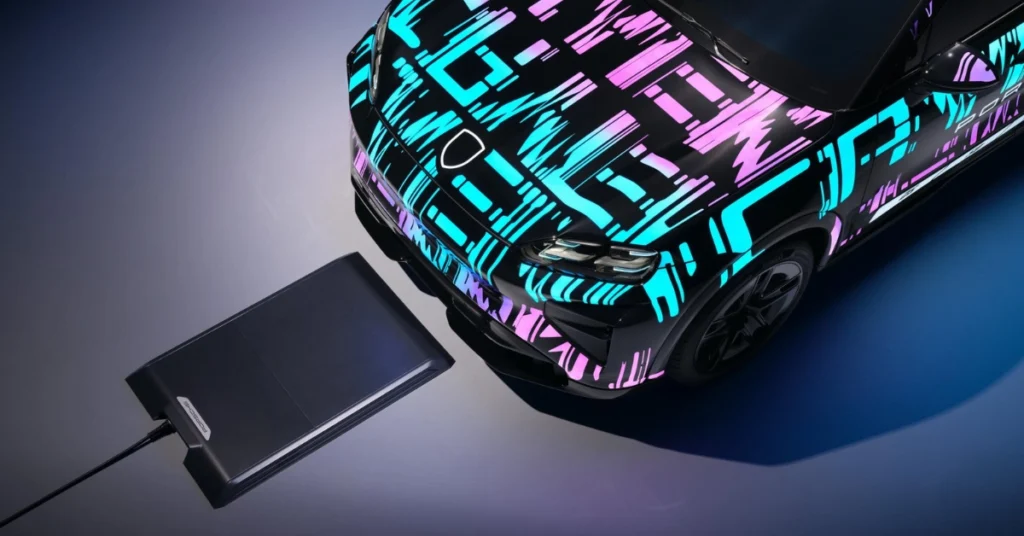
- Two-Part System: Floor plate in garage + receiver behind front axle.
- Easy Setup: Connect to power, and do a one-time Wi-Fi pairing for security.
- Smart Parking: PCM shows a green dot/circle; align within 10 cm tolerance.
- How It Works: Grid AC → DC → 85 kHz high-frequency AC; >90% efficiency over 12-18 cm gap.
- Safety Locked: Shields, ferrites, metal/pet detection, and full EMC compliance.
- Future Ready: Auto-parking and charging combo in development.
Porsche Leads the Charge: Introducing Contactless Power for the Cayenne Electric
Imagine pulling into your garage, shifting into park, and walking away—your Porsche Cayenne Electric already humming with fresh energy. No fumbling with cables or wrestling with plugs. This isn’t science fiction; it’s the reality Porsche is delivering with wireless inductive charging, an optional upgrade for the upcoming Cayenne Electric SUV. Set to join the lineup alongside combustion and hybrid variants, this system marks a bold leap into effortless electric mobility.
As the first automaker worldwide to roll out contactless charging tailored for high-performance EVs, Porsche is redefining convenience. But how does it actually work? Let’s break it down.
The Core Components: Minimalist Design for Maximum Ease
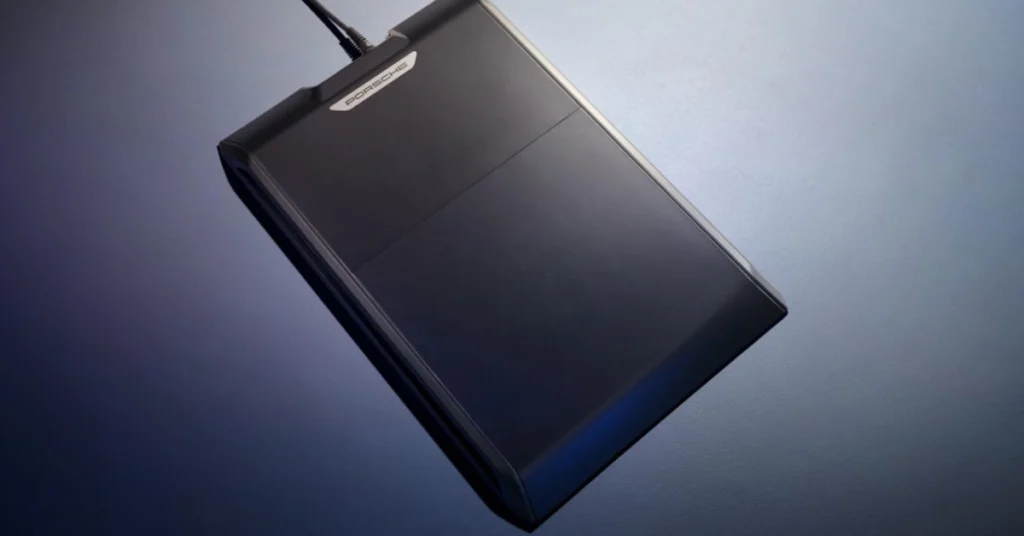
At its heart, the inductive charging setup boils down to just two straightforward elements: a sleek floor plate installed in your garage or parking spot and a discreet receiver module tucked away behind the Cayenne Electric’s front axle. “Porsche is currently the only car manufacturer in the world that is going to offer contactless charging, with an innovative 11 kW one-box system,” shares Christian Holler, head of charging systems at Porsche. This tech draws from everyday inductive wonders like smartphone pads, induction cooktops, and electric toothbrushes—but supercharged for the demands of a full-size luxury SUV.
Effortless Installation: Plug-and-Play Simplicity
Setting it up couldn’t be easier. Align the floor plate dead-center under the parked SUV’s front axle—its compact housing (measuring a mere 6 cm in height, 78 cm wide, and 117 cm long) packs in all the essentials. “Previous solutions needed additional components like a wallbox,” points out product manager Simon Schulze. Here, you simply wire it to your home’s electricity supply, and you’re good to go. No bulky extras, no electrician marathon.
Before the magic starts, the system needs a one-time handshake. Much like pairing your phone with the Porsche Communication Management (PCM) infotainment, the Cayenne Electric and floor plate swap data—including a secure password—via the plate’s built-in Wi-Fi module. This initialization guards against mischief like unauthorized power draws. From then on, as your vehicle rolls into range, it pings the plate automatically.
Guided Parking: Your Cayenne’s Green Light to Charge
The driver experience? Pure intuition. Fire up the Surround View parking display on your PCM, and voila—your Cayenne Electric pops up with a welcoming green glow. A bright green dot highlights the receiver’s spot near the front axle, while a surrounding green circle outlines the charging coil’s sweet zone. The message is crystal clear: nestle that dot inside the circle, and you’re perfectly positioned.
“We use technology from the Keyless Go system, which is used for keyless vehicle unlocking,” reveals development engineer Simon Klein. It’s powered by two sensors in the car syncing with four detectors in the floor plate, ensuring pinpoint accuracy every time.
The Science Behind the Spark: Inductive Coupling Explained
This isn’t flashy new-age wizardry—it’s inductive coupling, a principle as old as electricity itself, dating back over a century. Picture two coils of copper wire facing off: Juice up the primary one in the floor plate with electric current, and it spins up a magnetic field. That field dances across to the secondary coil in the vehicle, inducing a voltage to kickstart charging. Familiar? Absolutely—it’s the same force wirelessly juicing your phone overnight.
But scaling this for a beefy EV like the Cayenne Electric? That’s where Porsche’s engineering shines. Low-power gadgets like phones hum along fine at standard levels, but cars demand more oomph. Blindly ramping up wouldn’t cut it for efficiency, safety, or cost. Instead, Porsche’s team opted for a streamlined path: Grid AC voltage (50 Hz in Europe, 60 Hz in the US) flips to DC inside the floor plate first. Then, it morphs into a high-frequency 85 kHz AC at 2,000 volts in the oscillating circuit—that’s 85,000 cycles per second for turbocharged energy flow.
“This approach ensures that enough energy is transmitted even if the transmitter and receiver coils are not positioned perfectly in line with one another,” notes development engineer Dominik Scherer. Smart software constantly scans for offsets and tweaks parameters on the fly. A little wiggle room? Built right in – up to 10 cm of misalignment won’t faze it. “We have purposefully allowed some tolerance here,” adds Simon Schulze.
Hit the parking brake, and the transfer begins: Up to 11 kW of power zips across a 12-18 cm air gap (accounting for the Cayenne Electric’s standard ride height), clocking over 90% efficiency. Charge times and output mirror a traditional plugged-in wallbox—seamless, just sans the cord. The receiver stays invisible, shielded within the underbody paneling.
Uncompromising Safety: No Room for Sparks or Surprises
High power means high stakes, but Porsche has layered in robust safeguards. The receiver coil sits behind a shielding plate that corrals the magnetic field downward, sparing the car’s guts from stray interference. Ferrites—magnetic guides—funnel the flux precisely between the floor plate’s underside and the receiver’s top side.
Then there’s the double-detection duo: The floor plate’s foreign-object sensor sniffs out rogue metals (think dropped keys or coins), while live-object motion detectors keep watch for furry friends or wandering hands underneath. Spot a threat? It alerts you via the PCM or slams the brakes on charging instantly. “A metal part would heat up, just like on an induction stove,” cautions Simon Schulze. “Our security precautions make sure that doesn’t happen.” Plus, the whole setup sails well under electromagnetic compatibility (EMC) thresholds, playing nice with pacemakers, gadgets, and nearby tech.
The Horizon: Automatic Parking Meets Inductive Magic
Porsche isn’t stopping at convenience—they’re gunning for automation. Envision this: Roll up to the garage, tap a button, and your Cayenne Electric takes over. It maneuvers into position, aligns flawlessly, initiates charging, and chills until you’re ready to roar off again—battery brimming. This fusion of self-parking smarts and contactless power? It’s the next chapter in Porsche’s electric evolution, blending thrill with effortless everyday luxury.
Images and News Source: newsroom.porsche.com
Read more about EV Car News
Also Read
- MG Windsor Big Discounts Jan 2026: First-Ever Offers Make It Cheaper Than Launch Price
- JSW Motors To Enter Passenger Car Space In June With Rs 45 Lakh Plug-In Hybrid SUV

- Maruti Suzuki Second Car Plant Gujarat Investment: ₹4,960 Crore for 10 Lakh Unit Capacity

- India’s EV Sales Reach 2.3 Million Units in 2025, 8 Percent of New Vehicles: Strong Growth Led by Two-Wheelers
- VinFast Off to a Fast Start, Crosses 1k EV Sales in India: Milestone in Just Four Months
- What Happens To EV Battery After End-Of-Life?