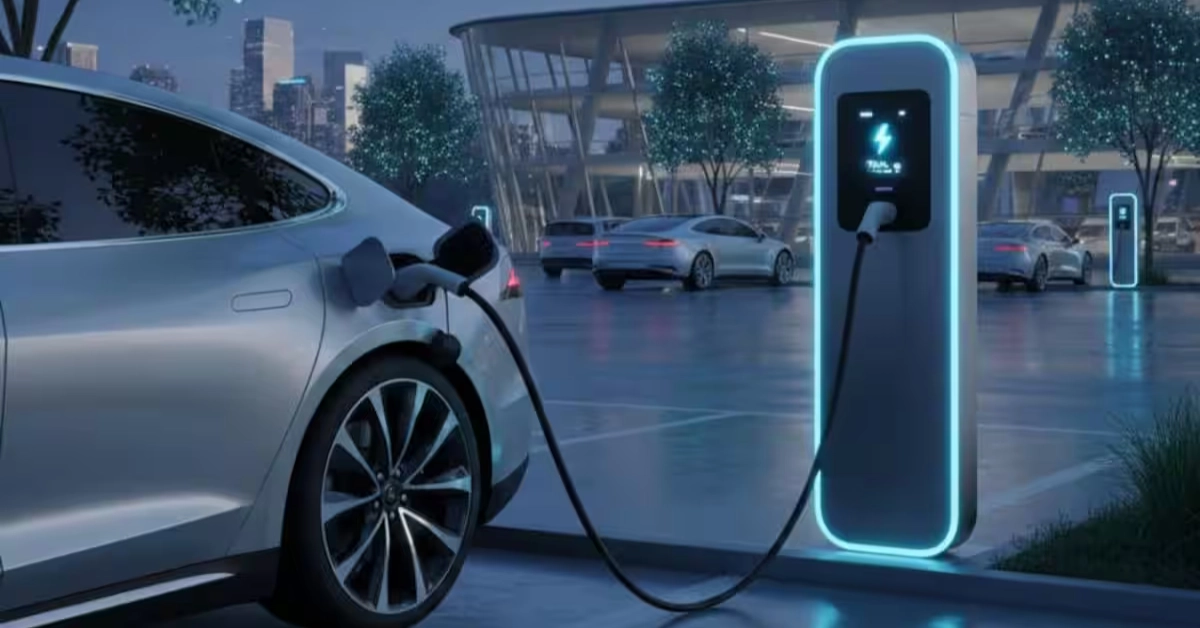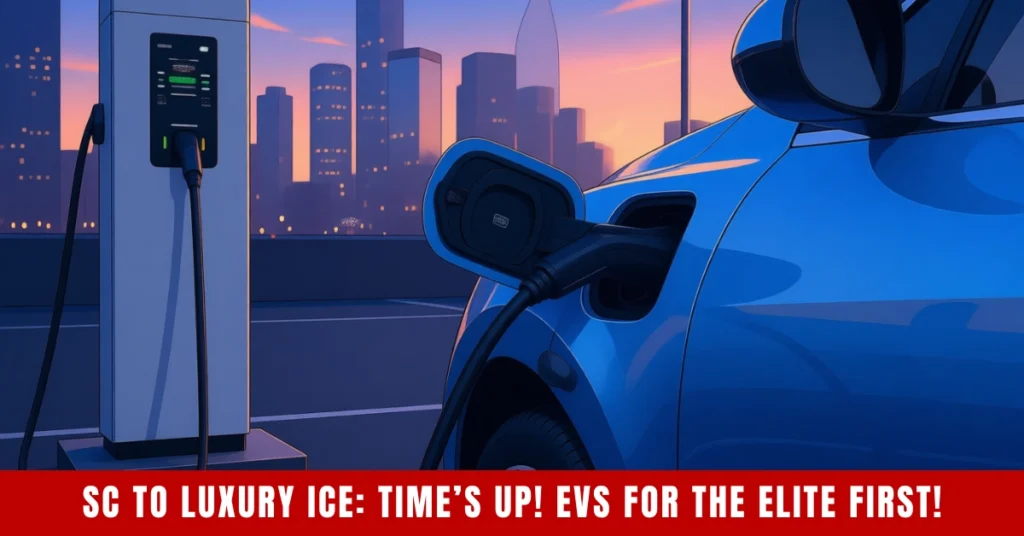
AI-generated image
Overview
- Luxury ICE First in Line: The Supreme Court suggests high-end petrol and diesel vehicles be gradually banned to push EV adoption without affecting common citizens.
- Judicial Bench: Justices Surya Kant and Joymalya Bagchi hear PIL on EV policy enforcement.
- Fundamental Rights at Stake: Petitioners invoke Articles 14 (equality) and 21 (right to life & clean environment) against pollution from fossil fuels.
- Govt on Board: Attorney General R.Venkataramani confirms 13 ministries working on EV ecosystem; report due in 30 days.
- Charging Infra Strategy: SC says demand drives growth; urges petrol pumps to install EV chargers.
- Policy Overhaul: Calls for NEMMP 2020 update and EV pilot projects in metros.
- Petitioner Push: Prashant Bhushan highlights falling EV prices but slow charger rollout.
- Next Hearing: One month from November 13, 2025.
SC High-End Petrol Diesel Ban: Supreme Court Urges Luxury ICE Phase-Out to Electrify India’s Roads—A Bold Step for Clean Air & Climate Justice
In a landmark hearing that could reshape India’s automotive future, the Supreme Court of India has sent a strong message: high-end petrol and diesel cars should be the first to go as the nation accelerates its electric vehicle (EV) transition. Presiding over a public interest litigation (PIL) demanding stricter enforcement of long-standing EV policies, a two-judge bench comprising Justices Surya Kant and Joymalya Bagchi observed that larger, premium electric models are now widely available, making it feasible to restrict luxury internal combustion engine (ICE) vehicles without impacting the average motorist.
“Just think of imposing a ban on the very high-end vehicles first of all. So it will not affect the common man, because a very small part of the Indian population can afford that.”
— Justice Surya Kant
This affluent-first strategy ensures that the burden of change falls on the elite while protecting the mobility needs of the masses. The court’s remarks came during arguments on a PIL filed by the Centre for Public Interest Litigation (CPIL)—represented by senior advocate Prashant Bhushan—along with Common Cause and the Sitaram Jindal Foundation. The petitioners assert that citizens’ constitutional rights to health and a clean environment under Articles 14 and 21 are being violated due to government inaction on air pollution and climate change, largely fueled by emissions from petrol and diesel vehicles.
The Core Argument: Health, Environment, and Constitutional Duty
The petitioners are demanding immediate and effective implementation of two key policy frameworks:
- National Electric Mobility Mission Plan (NEMMP) 2012—Launched by the Ministry of Heavy Industries to promote EV adoption.
- Zero Emission Vehicles: Towards a Policy Framework (2018)—NITI Aayog’s roadmap for phasing out fossil fuel vehicles.
They argue that despite falling EV prices and growing model options, the lack of charging infrastructure and weak policy execution continue to hinder mass adoption. Bhushan pointed out that while EV costs have dropped significantly, the slow rollout of public chargers remains a major roadblock for buyers.
SC’s Vision: Demand-Led Infra, Policy Refresh, Metro Pilots
The Bench offered pragmatic solutions:
- Charging Follows Demand: Infrastructure grows when more EVs hit the road.
- Repurpose Petrol Pumps: Existing fuel stations should install EV charging points.
- Update NEMMP 2020: Policies over a decade old need modernization.
- Pilot in Metros: Launch large-scale EV programs in Delhi, Mumbai, Bengaluru, etc.
The court emphasized that EV adoption must be accelerated to combat deadly air pollution in cities like Delhi, where vehicle emissions contribute over 40% to PM2.5 levels.
Government Response: 13 Ministries, One Mission
Attorney General R Venkataramani assured the court of strong governmental commitment:
- 13 Ministries Aligned: Including Heavy Industries, Power, Road Transport, Environment, and Finance.
- Consolidated Report: A comprehensive status update on all EV-related notifications to be submitted in one month.
- Support for Phase-Out: Govt broadly agrees with targeting luxury ICE first.
| Ministry Involvement | Focus Area |
|---|---|
| Heavy Industries | EV manufacturing, FAME subsidies |
| Power | Charging infra, grid upgrades |
| Road Transport | Registration, scrappage policy |
| Environment | Emission norms, air quality |
Why Target High-End Cars First?
| Advantage | Impact |
|---|---|
| Low Volume | <5% of total sales; minimal market disruption |
| High Visibility | Sends strong signal to industry & consumers |
| Affordability Neutral | Doesn’t affect mass-market buyers |
| EV Alternatives Exist | Mercedes EQS, BMW i7, Audi Q8 e-tron available |
This strategic sequencing allows India to test the waters of restriction without economic backlash.
The Bigger Picture: From Policy to Pollution-Free Roads
- Air Quality Crisis: Delhi AQI routinely crosses 400 in winter.
- Climate Commitment: India targets 30% EV sales by 2030.
- FAME-III in Pipeline: ₹10,900 Cr scheme to boost subsidies, infra.
- Global Precedent: Norway (87% EV sales), China (phasing ICE in cities).
Challenges Ahead: Infra, Awareness, Affordability
Despite progress:
- Charger Gap: Only ~15,000 public stations vs 1.3 million needed by 2030 (NITI Aayog).
- Consumer Hesitation: Range anxiety, high upfront cost.
- Industry Pushback: Luxury carmakers may resist bans.
Conclusion: A Judicial Jolt to India’s EV Journey
The Supreme Court’s call to ban high-end petrol and diesel cars is more than a suggestion — it’s a constitutional imperative for clean air and climate action. By focusing on luxury first, the court balances environmental urgency with social equity. With 13 ministries mobilizing, NEMMP revival, and charger mandates, India stands at a pivotal moment.
As Prashant Bhushan warns of infra delays and the AG promises action, one truth emerges: the era of unchecked fossil fuel luxury is ending. The SC has ignited a green judicial fire — and India’s roads may never be the same.
Source: business-standard.com
Read more about EV Car News
Also Read
- MG Windsor Big Discounts Jan 2026: First-Ever Offers Make It Cheaper Than Launch Price
- JSW Motors To Enter Passenger Car Space In June With Rs 45 Lakh Plug-In Hybrid SUV
- Maruti Suzuki Second Car Plant Gujarat Investment: ₹4,960 Crore for 10 Lakh Unit Capacity
- India’s EV Sales Reach 2.3 Million Units in 2025, 8 Percent of New Vehicles: Strong Growth Led by Two-Wheelers
- VinFast Off to a Fast Start, Crosses 1k EV Sales in India: Milestone in Just Four Months
- What Happens To EV Battery After End-Of-Life?