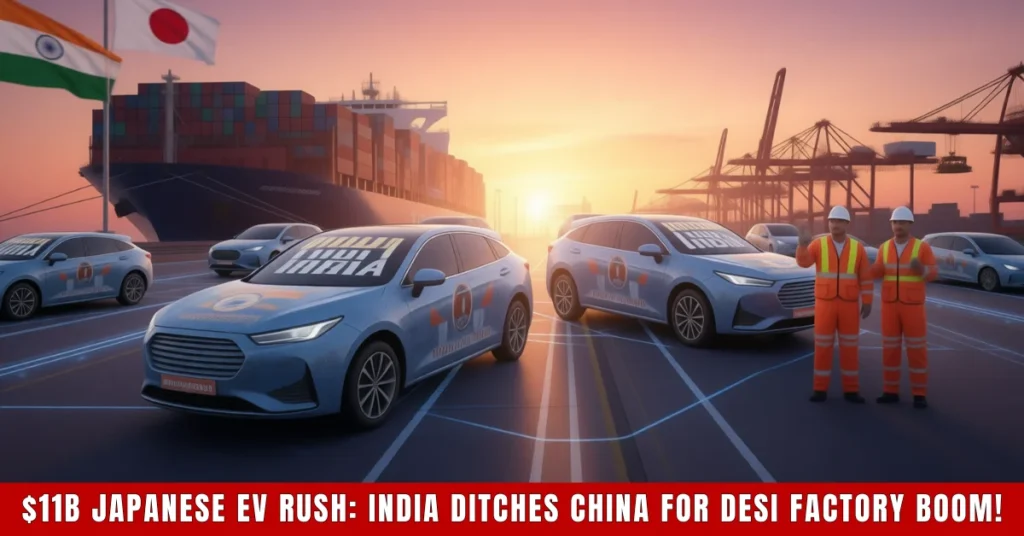
AI-generated image
Overview
- $11 Billion Japanese Influx: Toyota ($3B+), Suzuki ($8B), Honda (undisclosed) commit massive investments for factories, models, and exports.
- Production Pivot: Toyota eyes 1M+ capacity, 15 new models, and 10% market share; Honda makes India EV export base for Zero series.
- China Exit Signal: Japan’s India transport investment up 7x to $2B (2024); China down 83% to $46M.
- Modi Incentives: PLI, subsidies lure FDI; India’s 8% GDP growth, low costs, and skilled labor.
- EV Focus: Honda exports Zero EV to Japan/Asia from 2027; Toyota localizes hybrids.
- Export Ambitions: Suzuki to 4M cars/year from 2.5M; Toyota/Honda target global hubs.
- Protection Edge: India’s Chinese EV ban shields Japanese from BYD/MG price wars.
Toyota, Honda Turn India into Car Production Hub: $11B Pivot from China Dependency
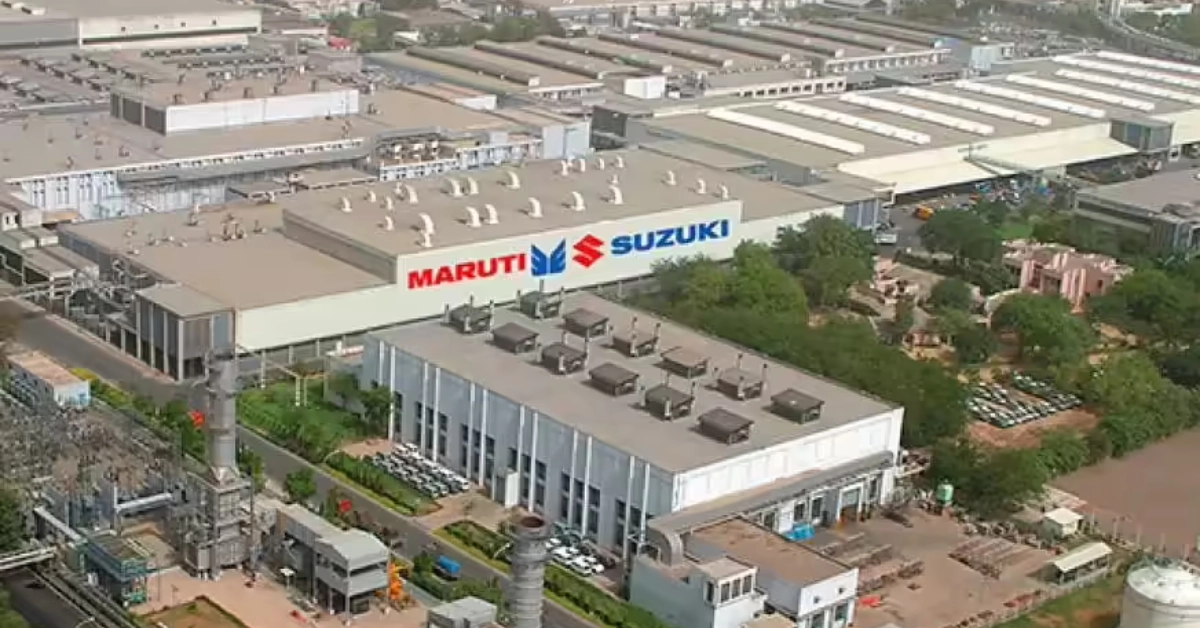
Japanese automotive giants Toyota, Honda, and Suzuki are funneling $11 billion into India’s manufacturing ecosystem, transforming the nation into a pivotal global production and export base while dialing back on China. This seismic shift—Toyota ($3B+ for a new plant, 15 models), Suzuki ($8B for 4M capacity), and Honda (India as a zero EV export hub)—reflects India’s ascent as a low-cost, skilled-labor powerhouse amid China’s EV price wars and geopolitical frictions. With Japan’s India transport FDI surging 7x to $2B in 2024 (China down 83% to $46M), PM Modi’s incentives like PLI schemes are paying off, shielding Japanese firms from BYD’s onslaught while boosting exports.
As India’s economy hums at 8% GDP growth over three years, these investments—announced amid Toyota’s Q3 earnings and Honda’s Mobility Show remarks—signal a strategic realignment. “India is extremely important and set to grow,” Toyota President Koji Sato emphasized. With 5M passenger cars produced last FY (800K exported), India’s rising quality and Chinese EV barriers make it a “blessing in disguise” for Japanese OEMs.
$11B Breakdown: Giants’ India Playbook
| Automaker | Investment | Key Moves |
|---|---|---|
| Toyota | $3B+ | New Maharashtra plant (pre-2030), 100K capacity boost, 15 new/refreshed models, 10% market share target, hybrid localization. |
| Suzuki | $8B | Production to 4M/year from 2.5M; Maruti Suzuki as an export powerhouse. |
| Honda | Undisclosed | India as a Zero series EV production/export base (to Japan/Asia from 2027); 2nd largest car market after the US. |
China Pivot: Why India Now?
- Price War Pain: China’s EV margin squeeze (BYD, Geely, Xiaomi) erodes profits; overseas expansion erodes Japanese SE Asia share.
- FDI Rebalance: Japan’s India transport investment: 294B yen ($2B) in 2024 (+7x from 2021); China: 46B yen (-83%).
- India Advantages: Low costs, vast labor (1.4B population), improved quality, Modi’s FDI incentives (PLI, tax breaks).
- Chinese EV Shield: India’s import bans/limits protect from BYD/MG; Japanese gain cost edge vs locals (Tata, Mahindra SUVs).
Toyota’s Local Leap: From Global Specs to Desi Hybrids
- Capacity Surge: Existing southern plant + new Maharashtra facility for 1M+ vehicles.
- Model Offensive: 15 launches by decade-end; rural network expansion.
- Hybrid Focus: Localizing parts amid global shortages; India as a “replacement market” for China (per analyst Julie Boote).
- Pride Point: “Enhance exports from India,” Suzuki MD Toshihiro Suzuki echoed.
Honda’s Four-Wheel Ambition: EV Export Powerhouse
- Two-Wheel Dominance: India is #1 for profitable bikes and is now ramping up cars.
- Zero Series Bet: India as a production/export base for 1 EV model to Japan/Asia (2027).
- Market Priority: US > India > Japan for autos.
Modi’s Magnet: Incentives Draw $50B FDI (FY25)
- PLI Schemes: ₹25,938 Cr for autos; 18% GST rationalized (Sept 2025).
- Export Growth: 15% YoY (800K cars FY25).
- Protection Play: Limits Chinese entry (SAIC MG, BYD struggle expansion).
Challenges Ahead: India’s Tough Turf
- Local Rivals: Tata/Mahindra SUV gains erode Suzuki’s 40% share (was 50% pre-pandemic).
- Exit Precedents: Ford/GM struggled and quit.
- Competition: Toyota aims for 10% from 8%; Honda/Suzuki eye global hubs.
Conclusion: India’s Japanese EV Engine Roars
The $11B The Toyota-Honda-Suzuki infusion isn’t just FDI—it’s a geopolitical pivot. As China’s EV wars rage and exports flood SE Asia, India emerges as the safe, scalable hub with Modi’s incentives and Chinese EV walls. From Toyota’s 1M capacity to Honda’s zero exports and Suzuki’s 4M ambition, Japanese precision meets Indian scale. The result? A motorway to 10% GDP auto contribution by 2030, powering exports and jobs. China who?
News Source: economictimes.indiatimes.com
Read more about EV Car News
Also Read
- MG Windsor Big Discounts Jan 2026: First-Ever Offers Make It Cheaper Than Launch Price
- JSW Motors To Enter Passenger Car Space In June With Rs 45 Lakh Plug-In Hybrid SUV
- Maruti Suzuki Second Car Plant Gujarat Investment: ₹4,960 Crore for 10 Lakh Unit Capacity
- India’s EV Sales Reach 2.3 Million Units in 2025, 8 Percent of New Vehicles: Strong Growth Led by Two-Wheelers
- VinFast Off to a Fast Start, Crosses 1k EV Sales in India: Milestone in Just Four Months
- What Happens To EV Battery After End-Of-Life?